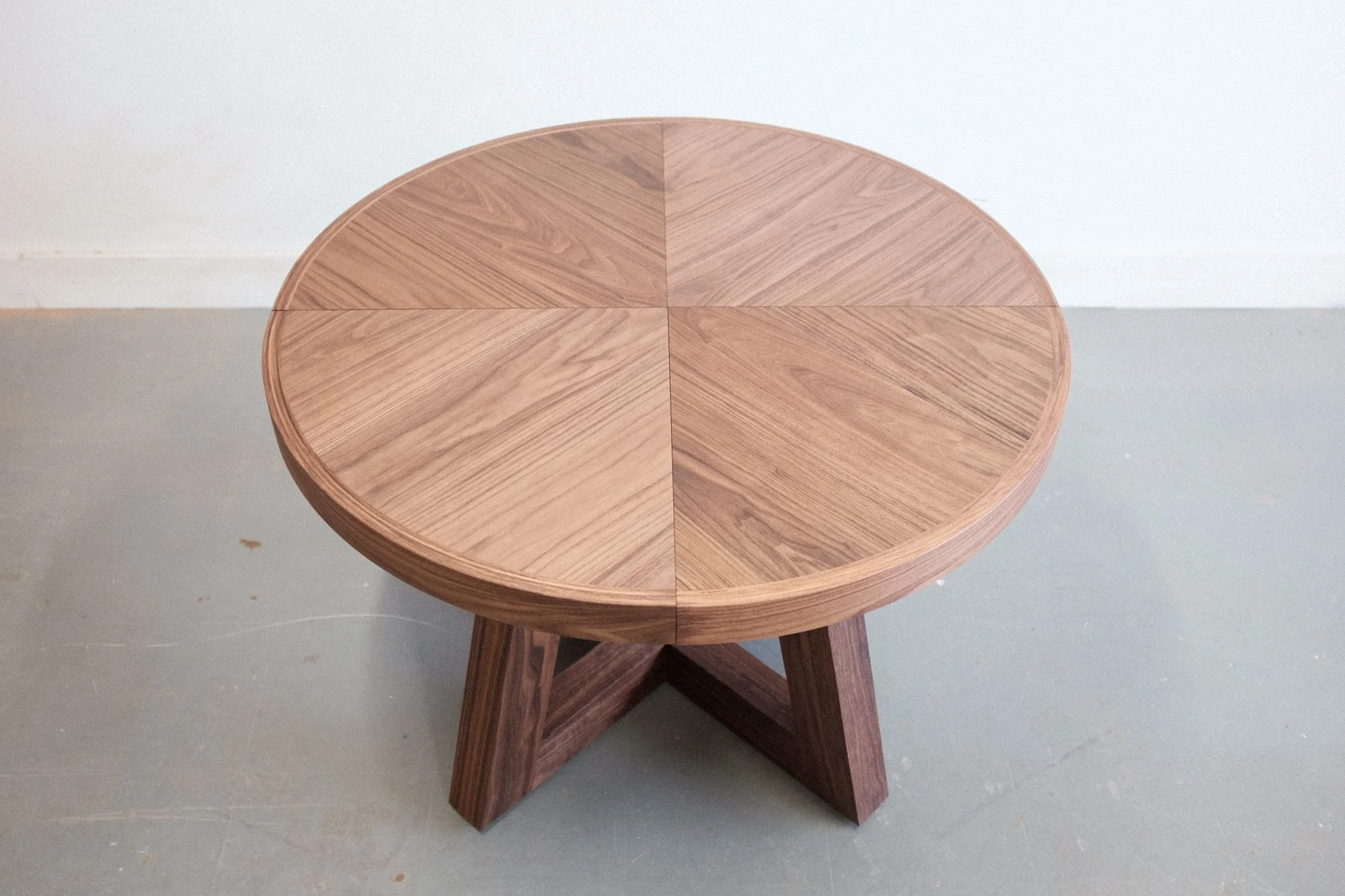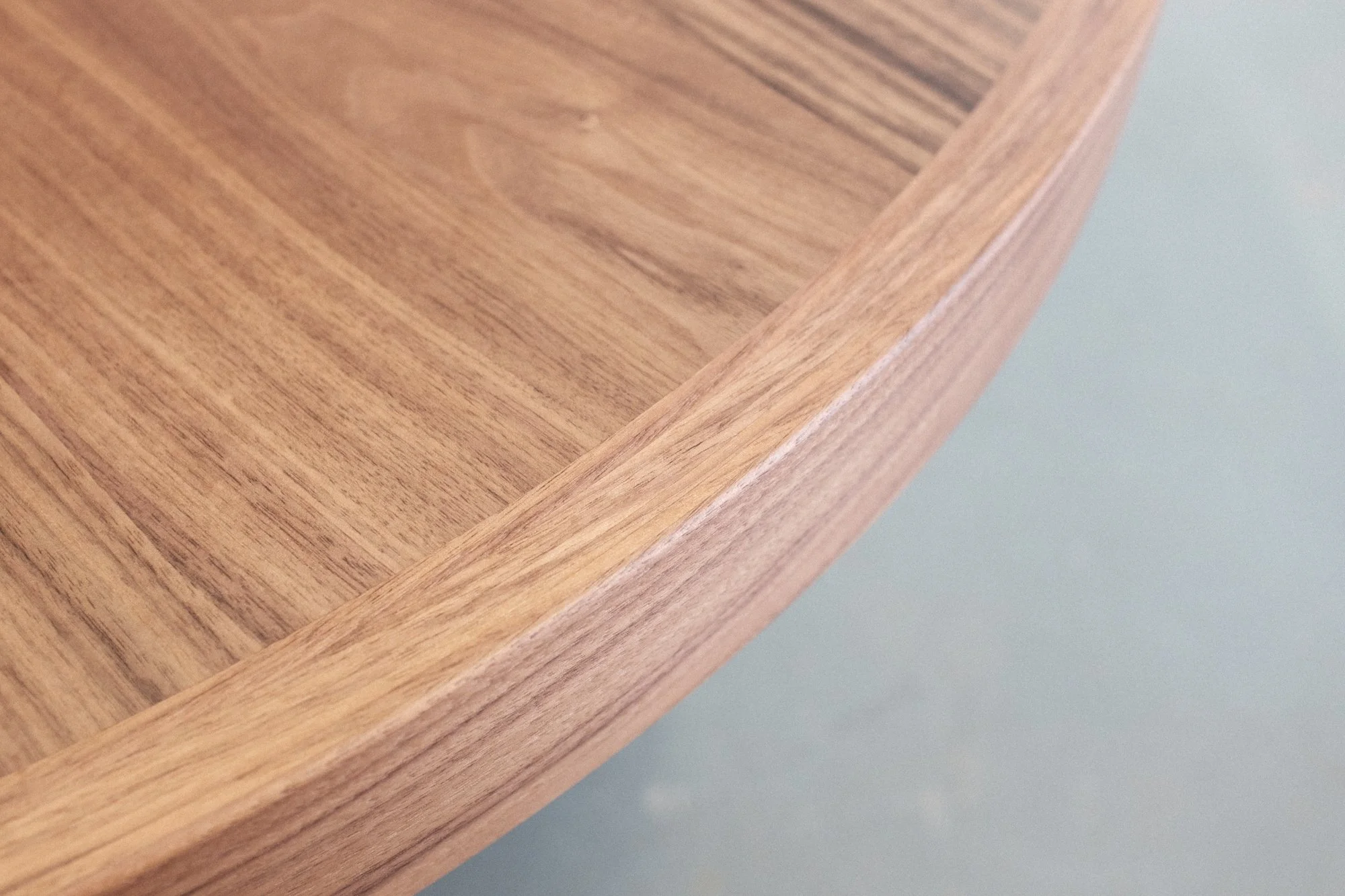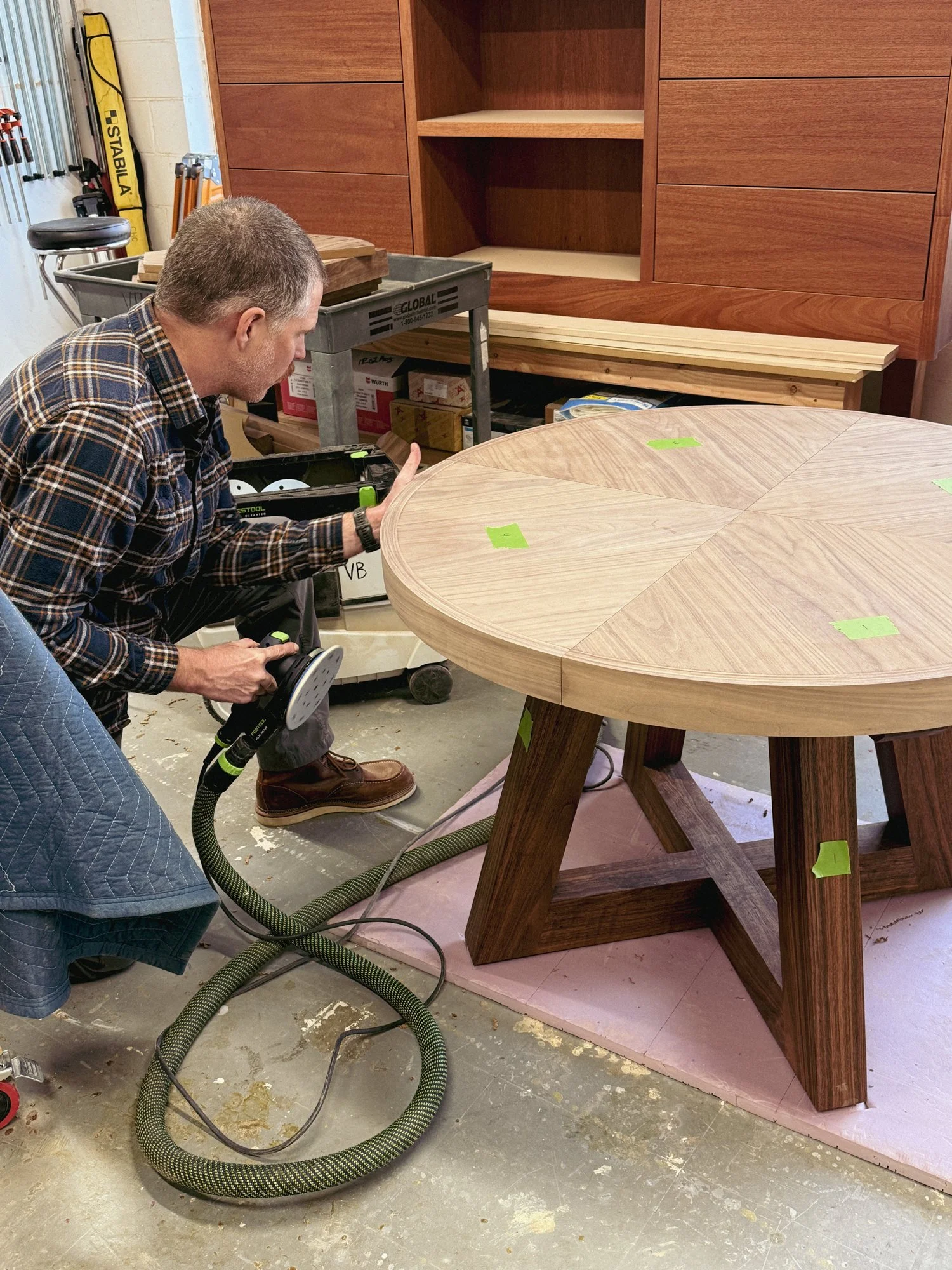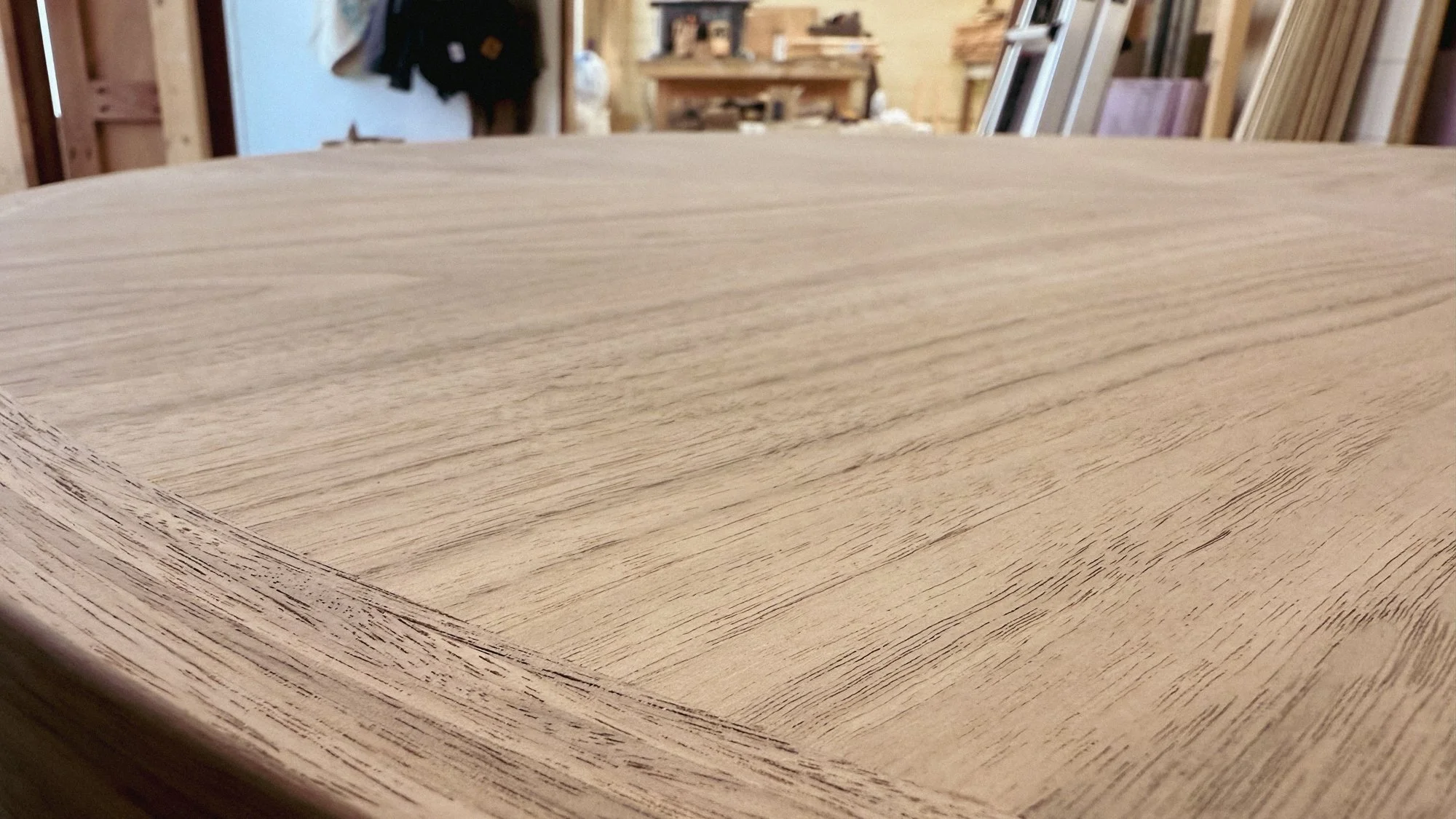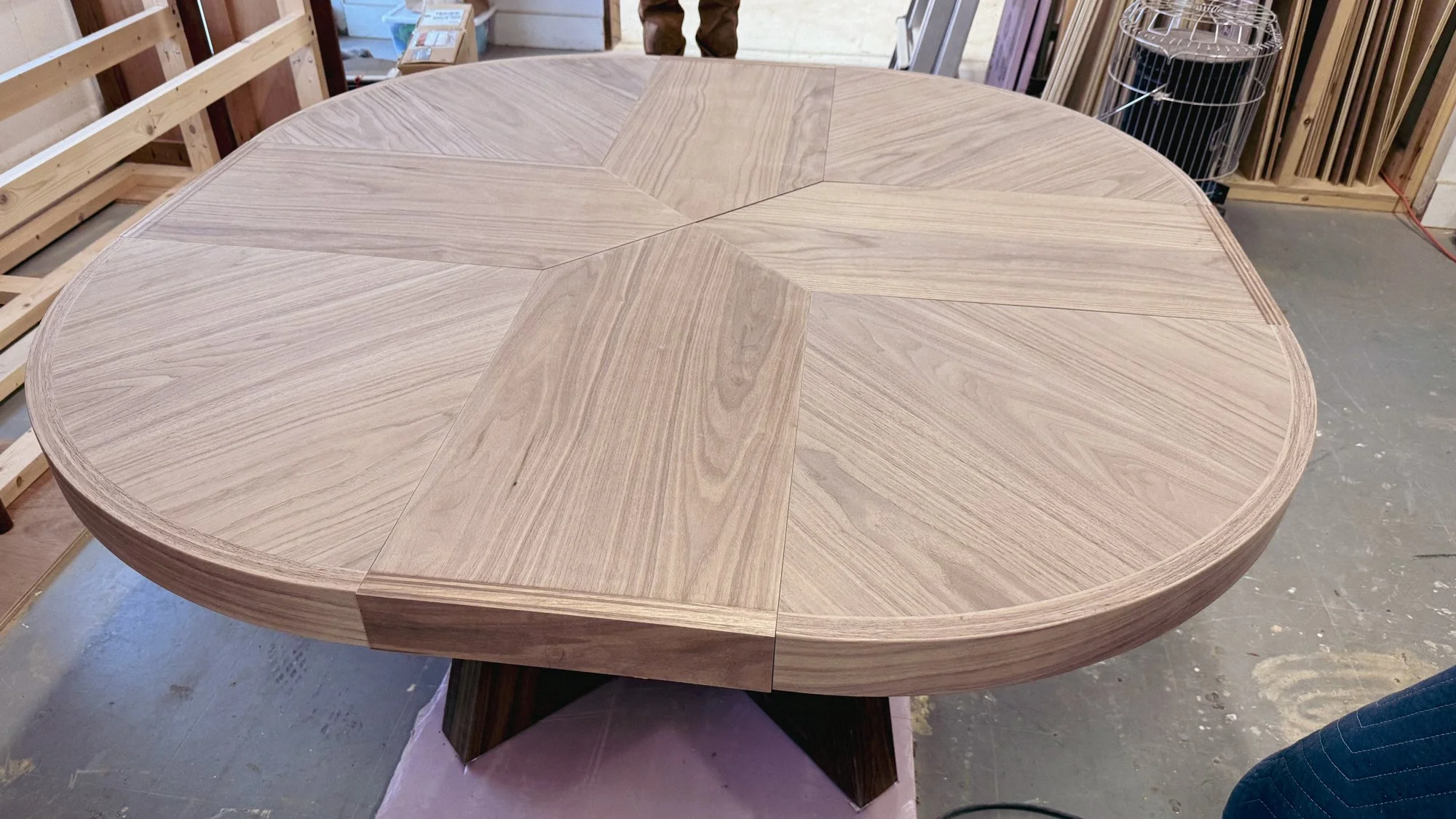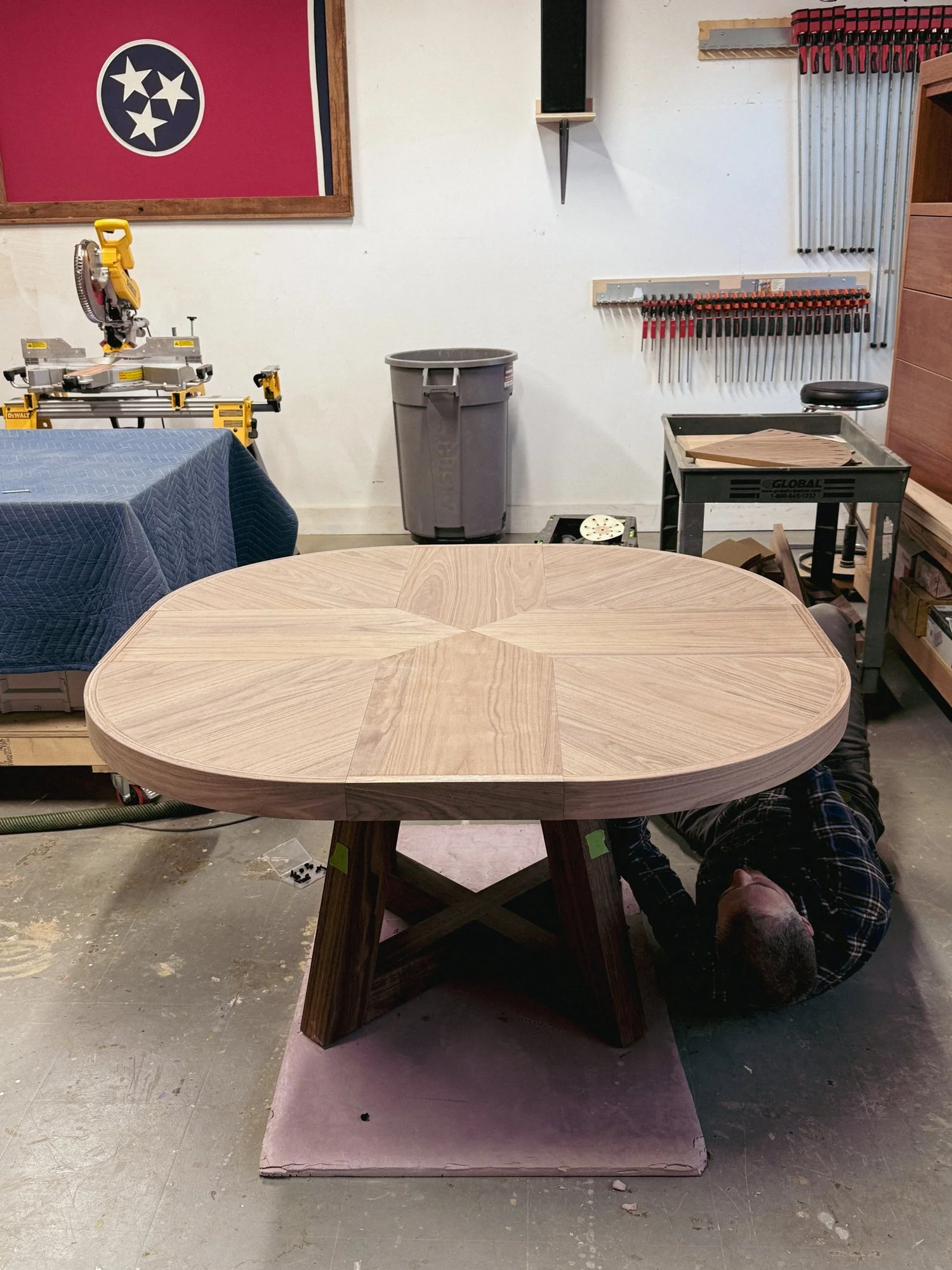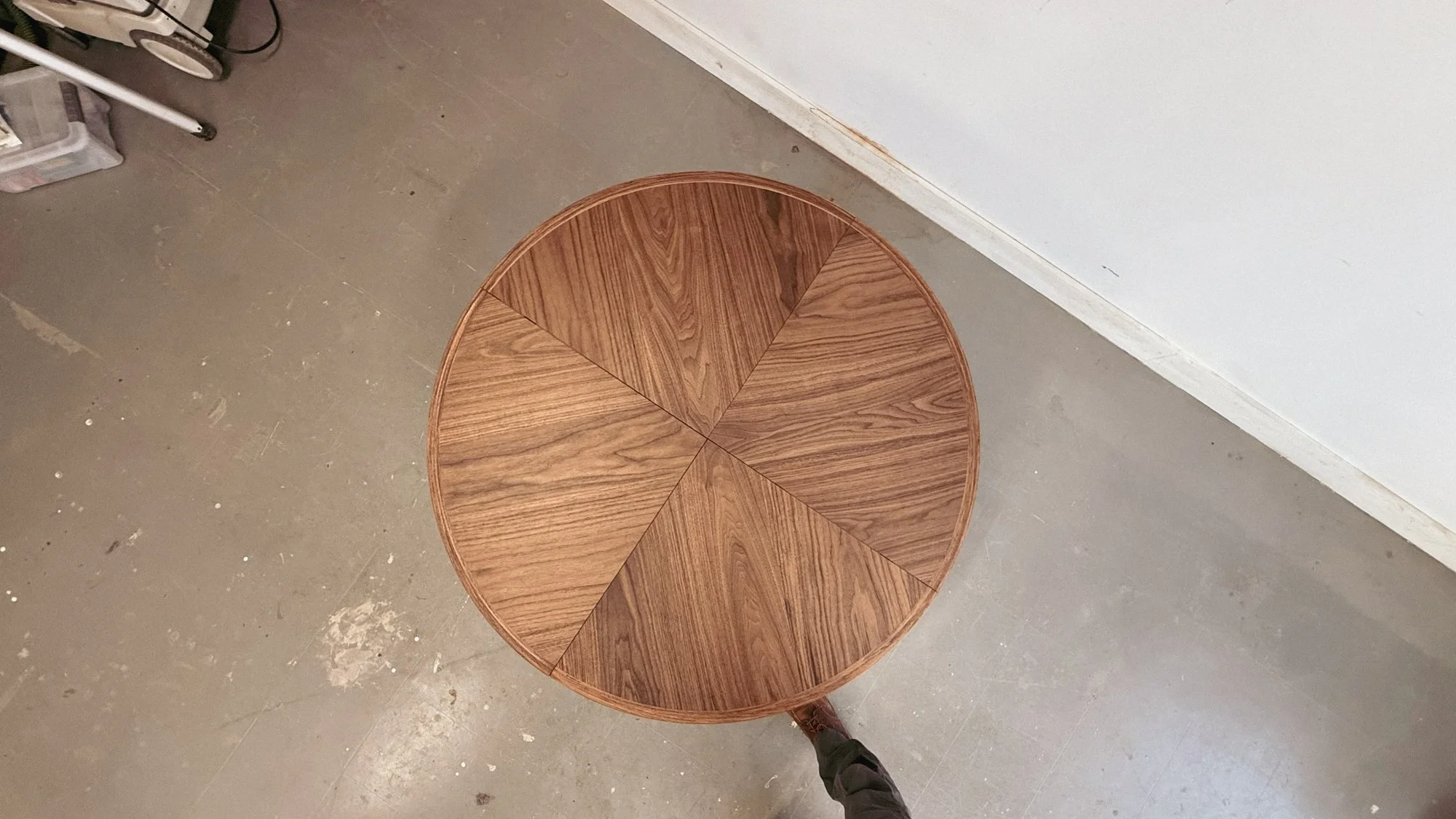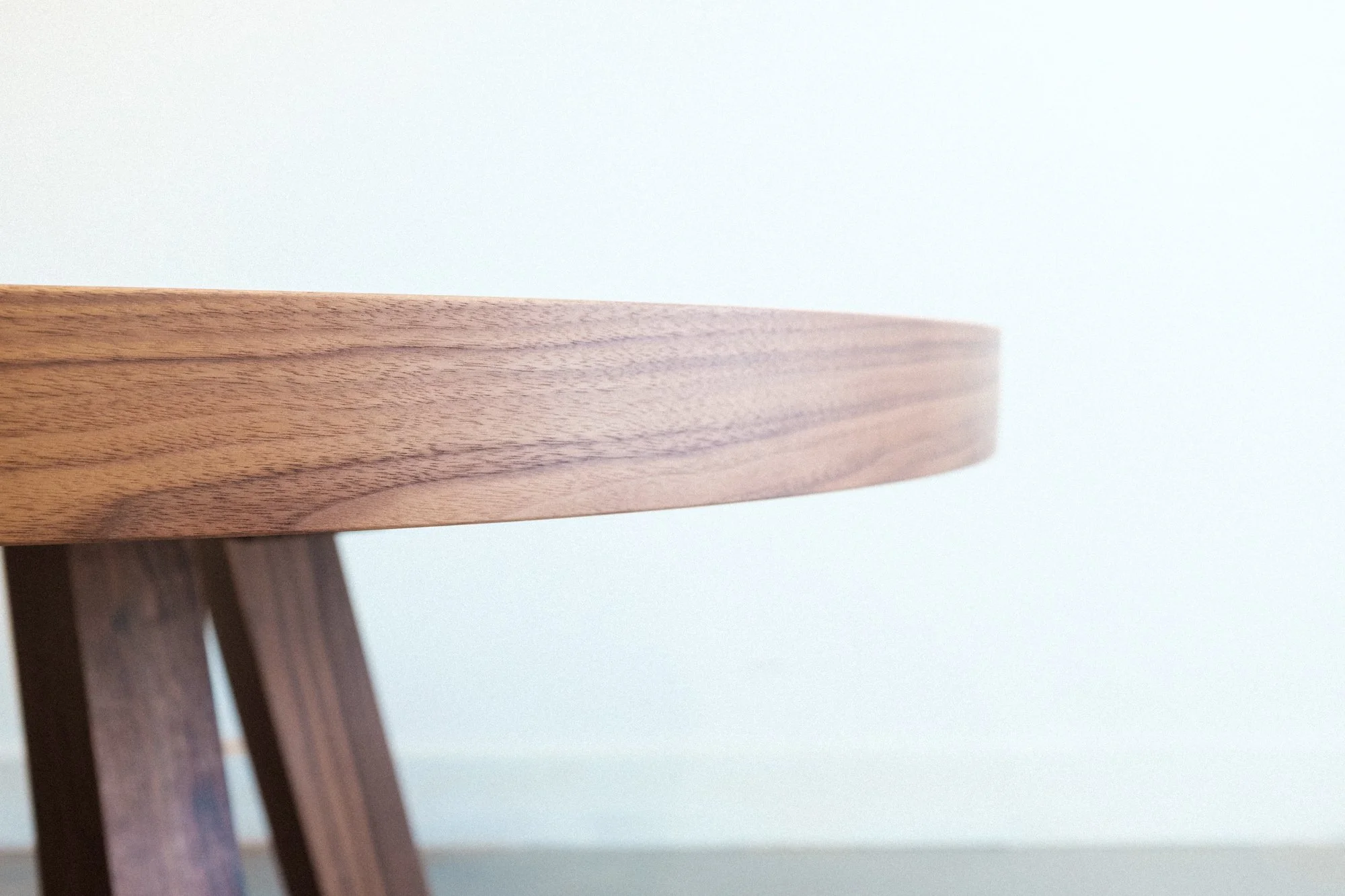
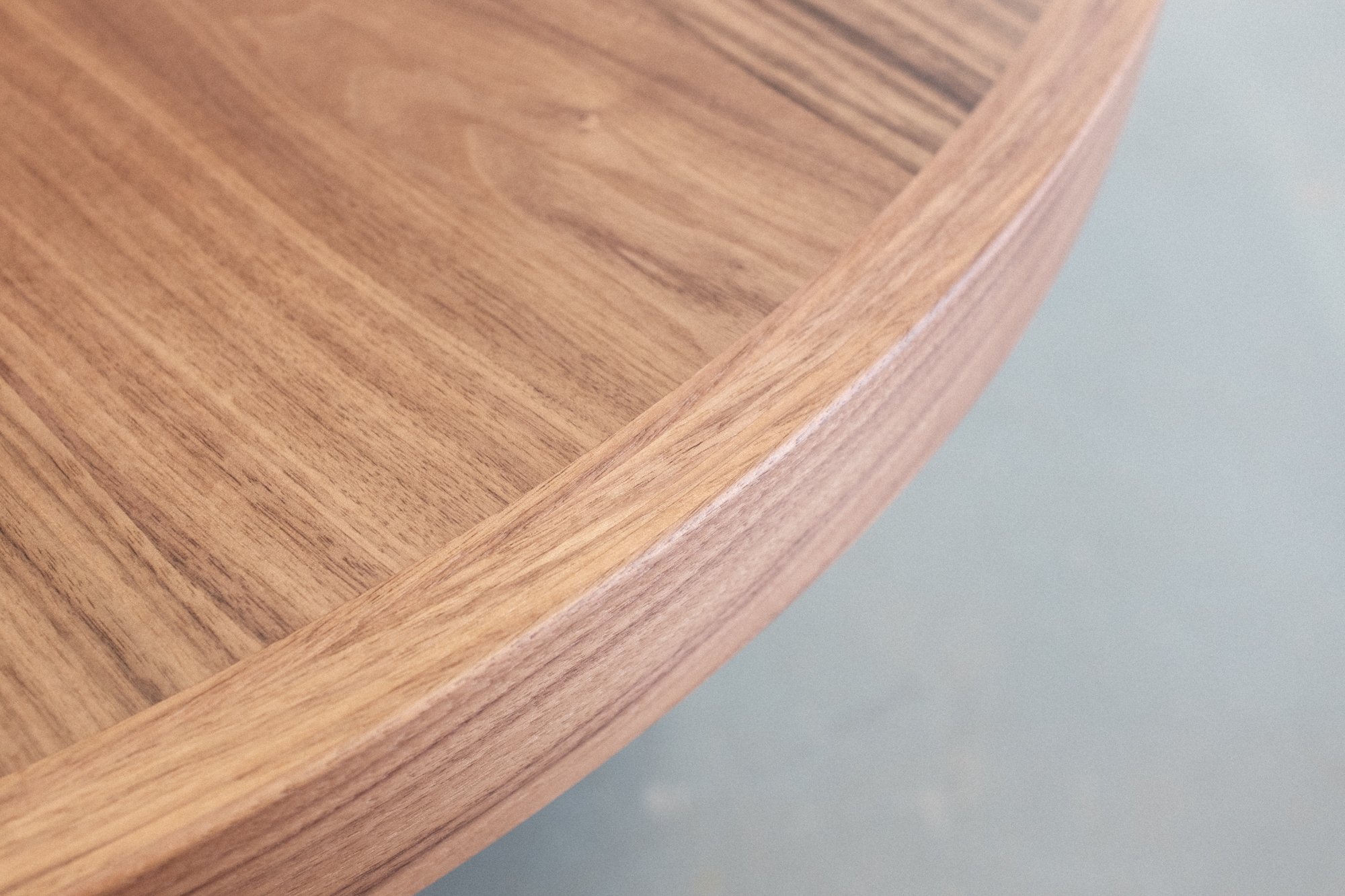
4-Leaf Expanding Walnut Dining Table
Nashville, TN
Anytime someone walks up and says, “I’ve got an idea. Just hear me out,” it’s usually a sign to politely walk away. But I’ve never been very good at that. My ears always perk up at the thought of trying something that hasn’t been done before. Not long ago, my friend Robert came to me with one of those ideas.
The problem was simple. His dining room was small and square, with traffic cutting through it from multiple directions, almost like a highway intersection. A standard expandable table wouldn’t work. With the leaves in, it would be too long to move around comfortably.
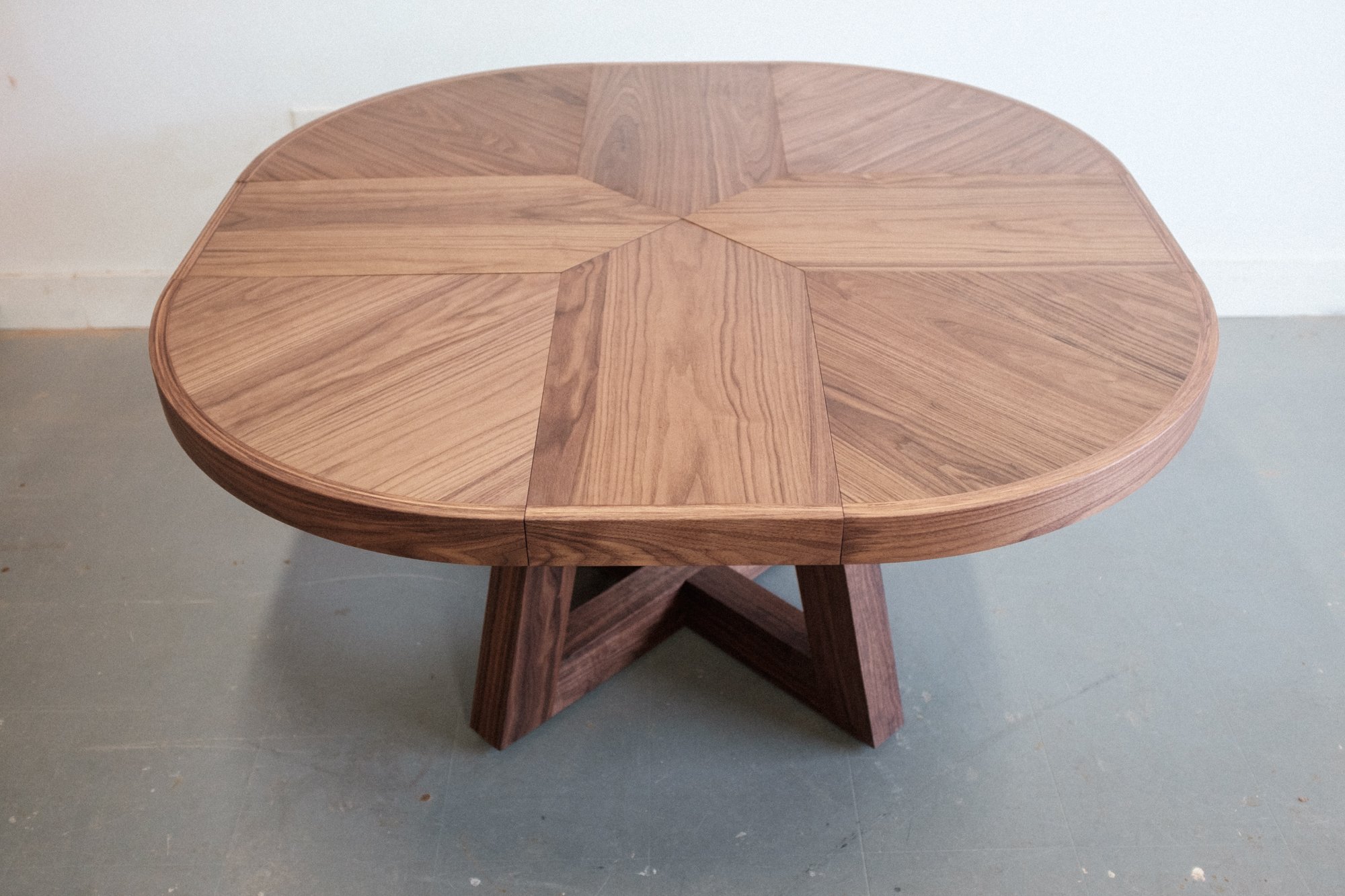
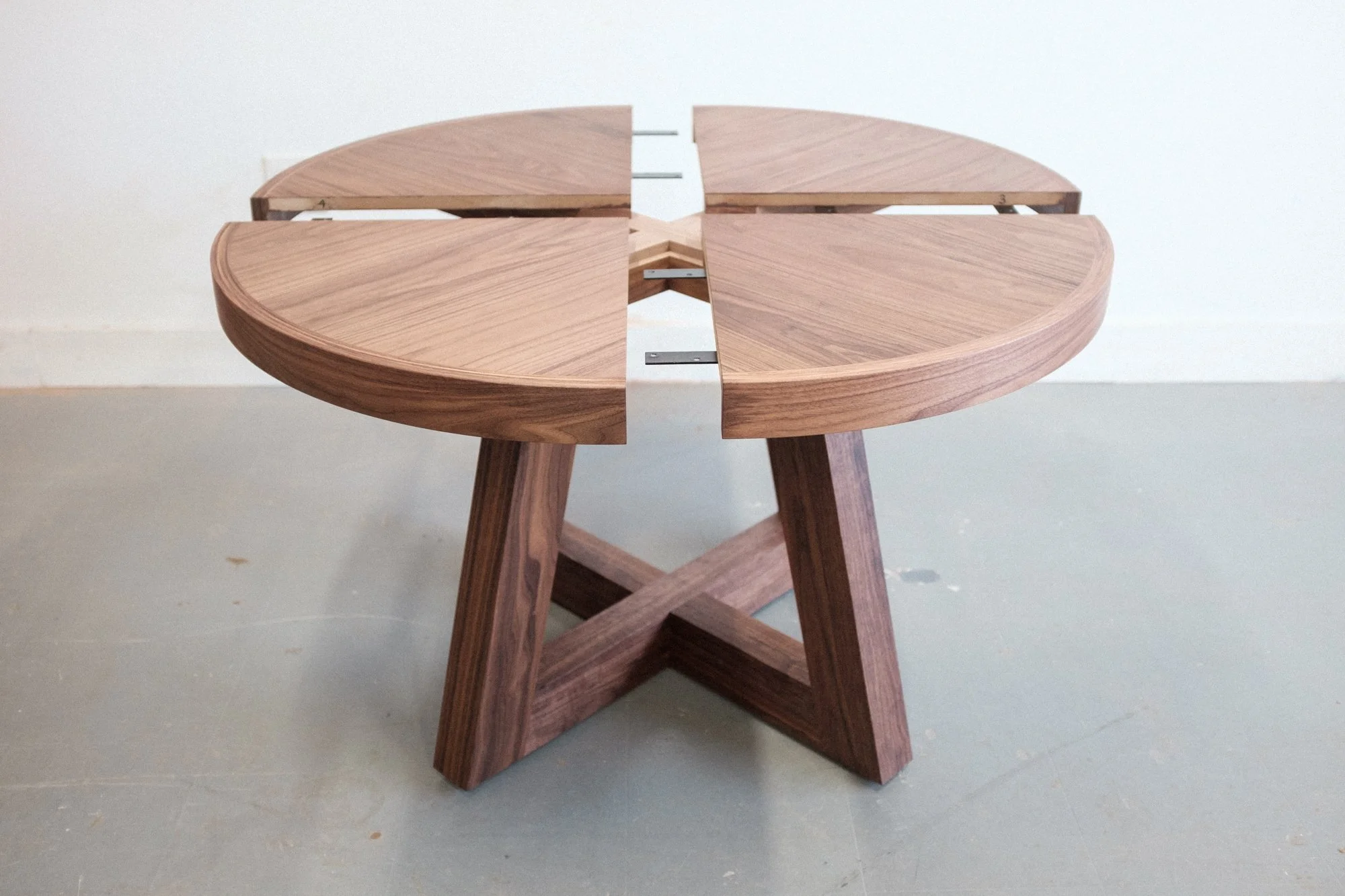
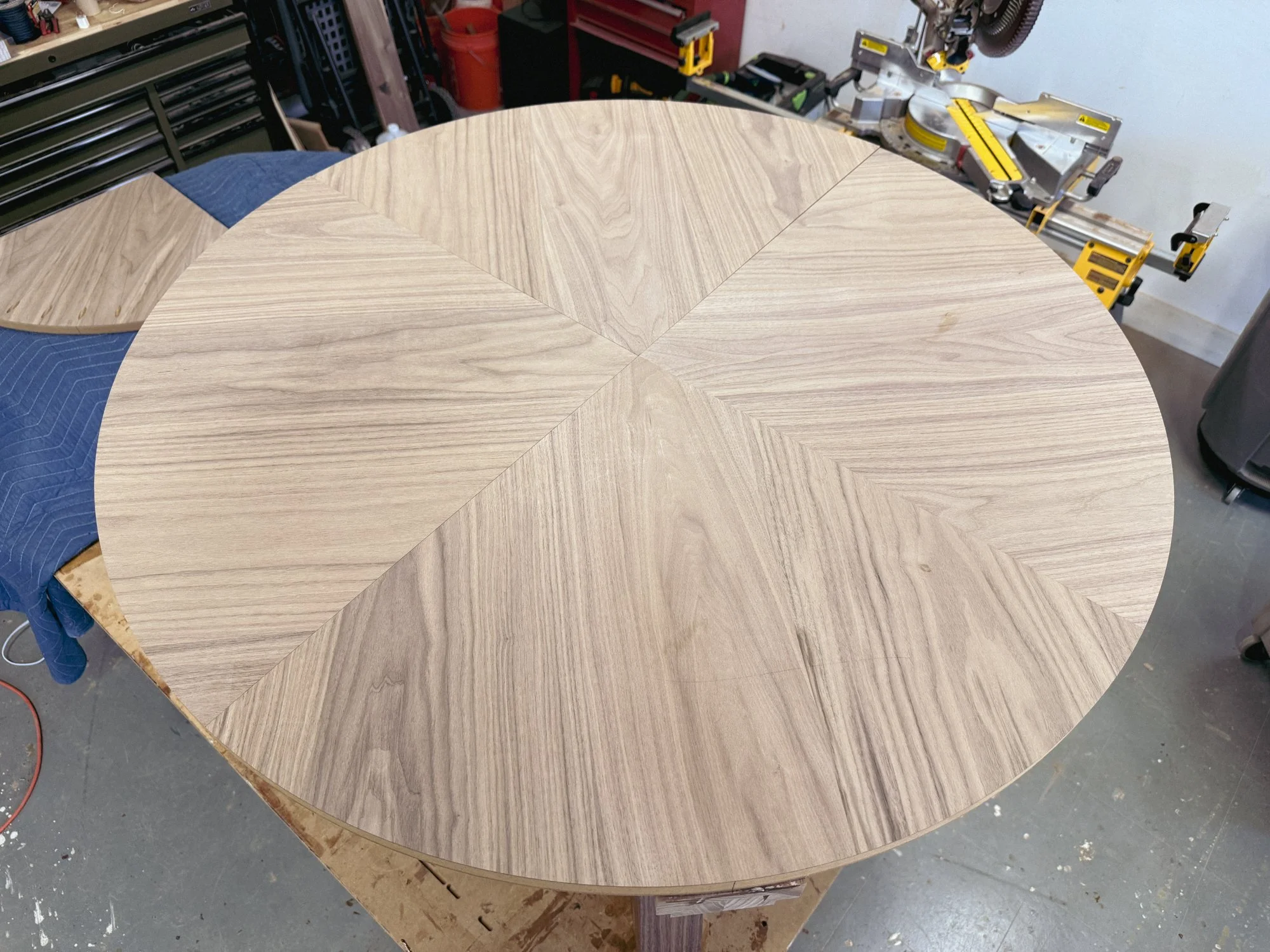
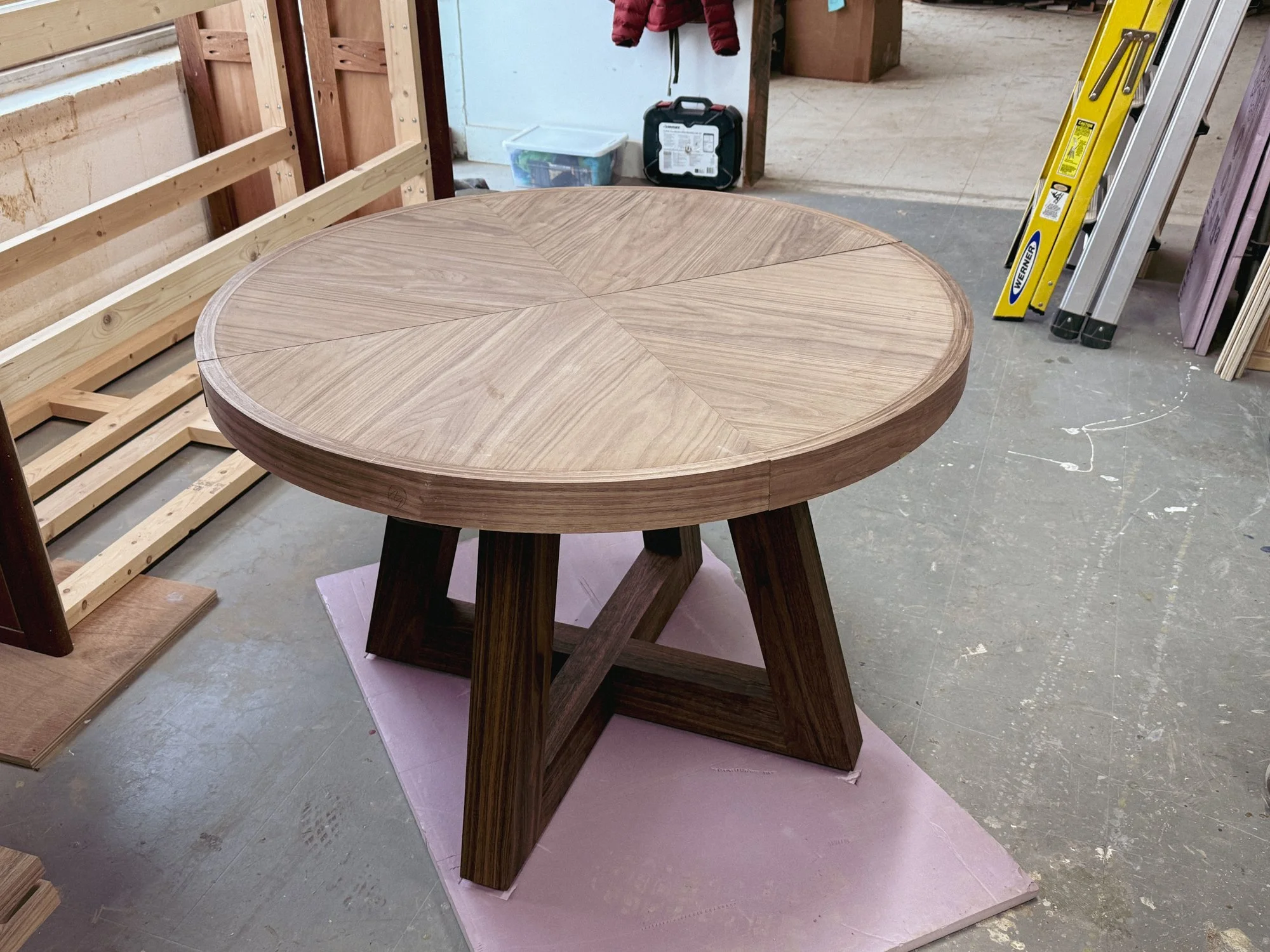
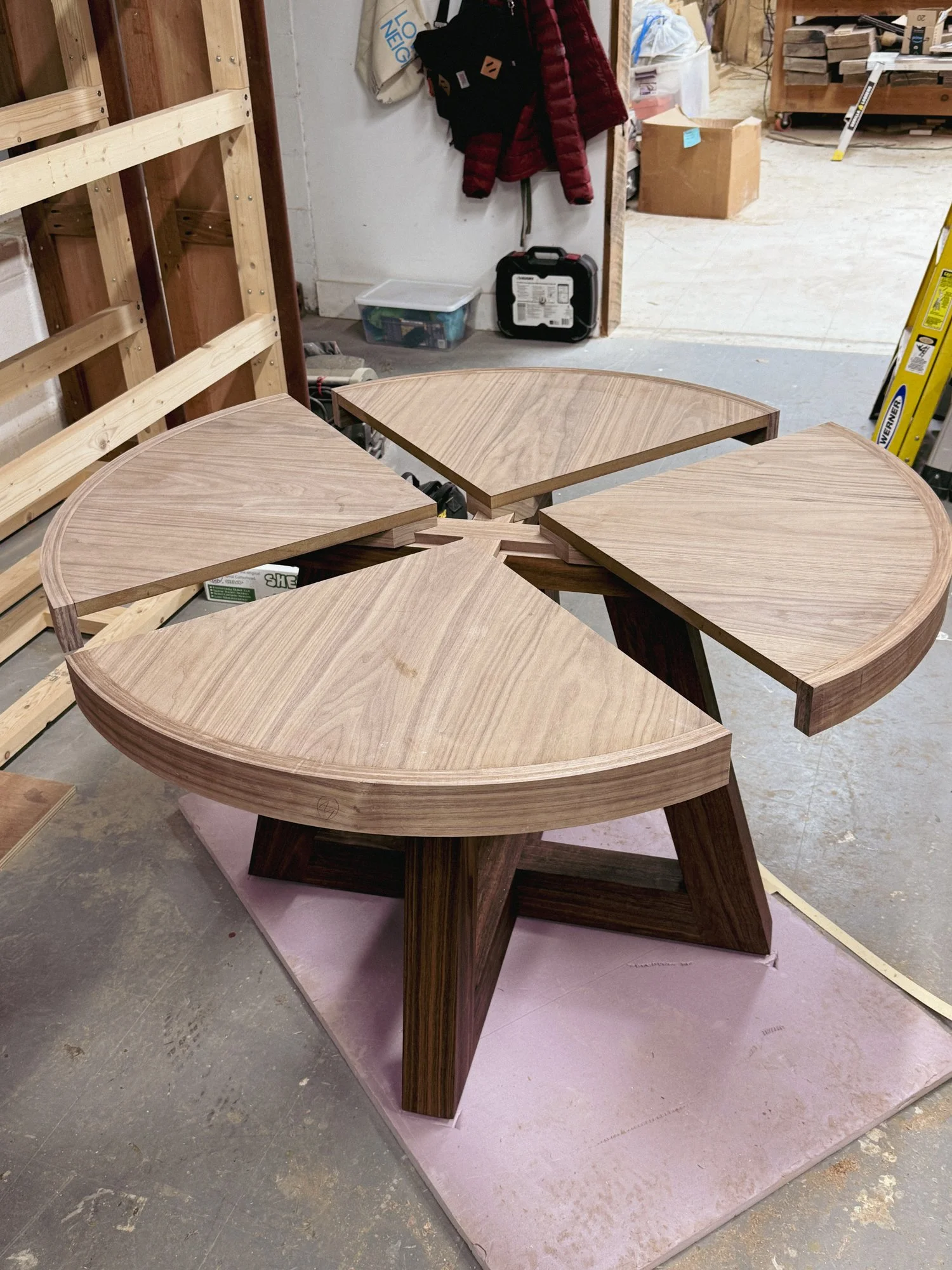
So Robert asked if we could come up with a round table that seats four day to day, but expands into a larger round table for eight when they’re hosting. And he needed it by Christmas.
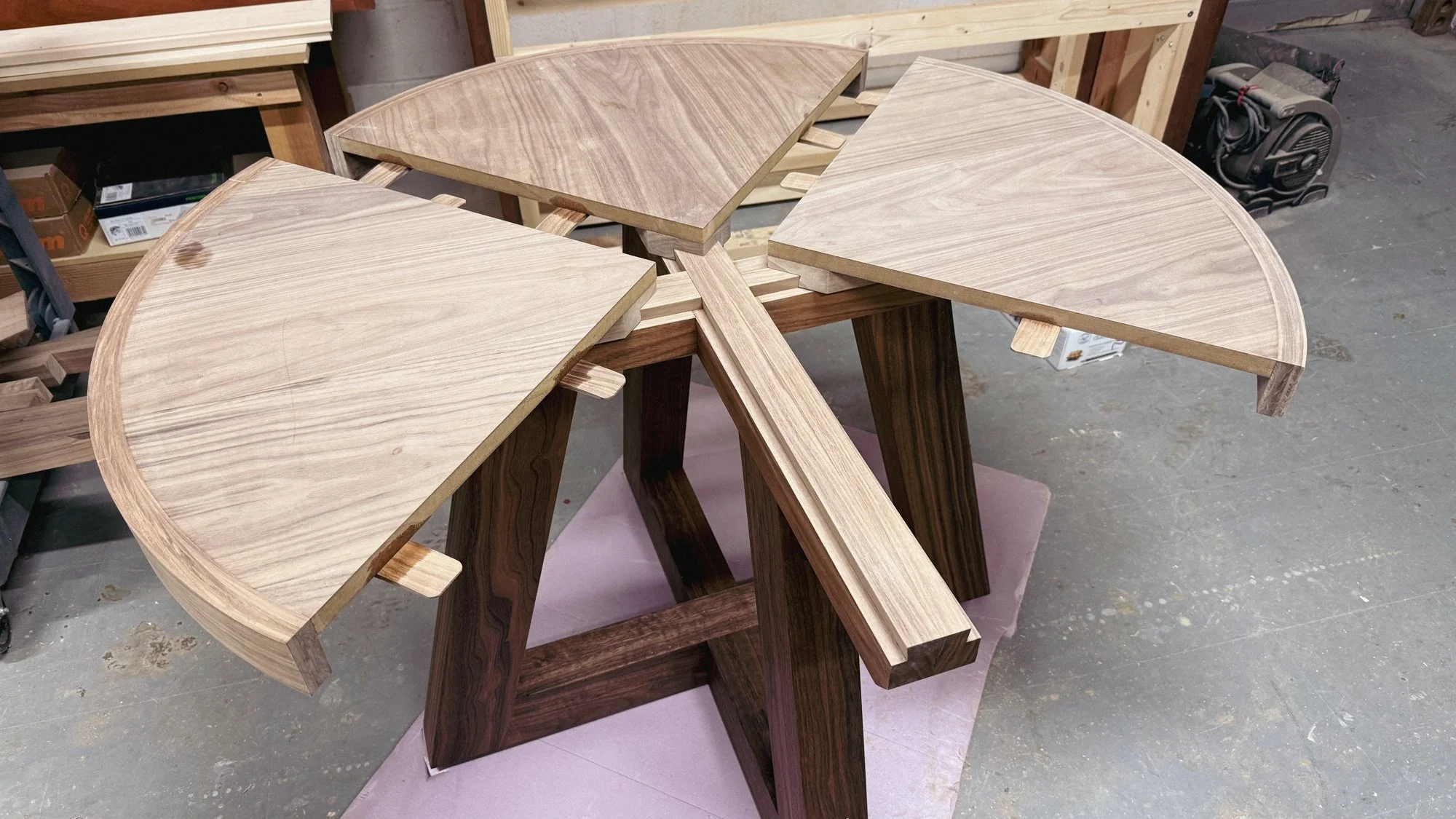
Most expanding tables grow in one direction. You add a leaf or two, and the table gets longer. But what if it needed to expand in every direction?
I’d only seen something like that once. It was an engineering feat with more moving parts than I could wrap my head around, almost like a camera aperture opening and closing. I knew I wasn’t going down that road.
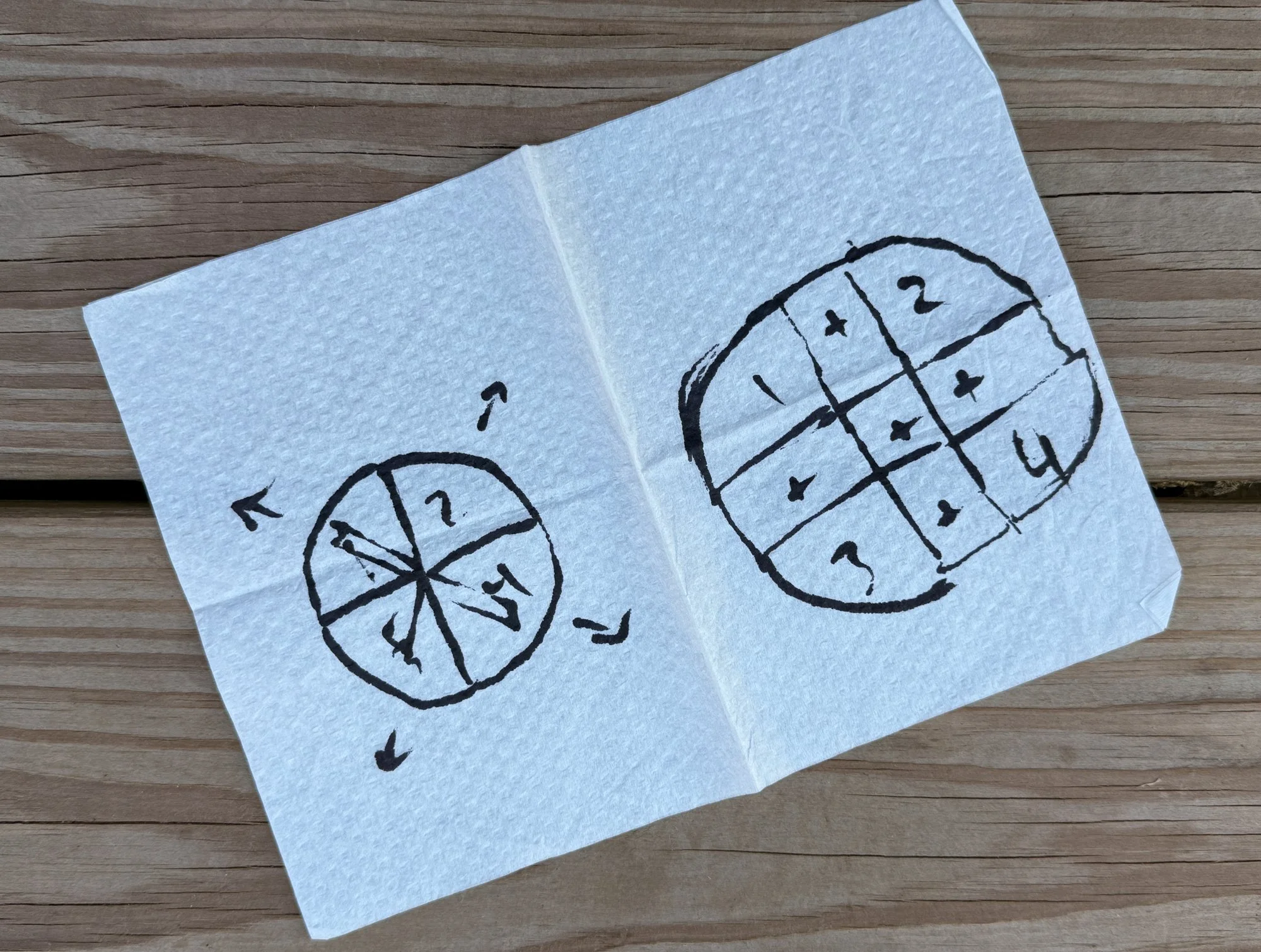
So I started thinking through other options. One day over lunch, Robert and I were talking it through when an idea hit me. I sketched it out on a napkin right there at the table. Robert got excited. I wasn’t convinced it would work, but it felt like a place to start.
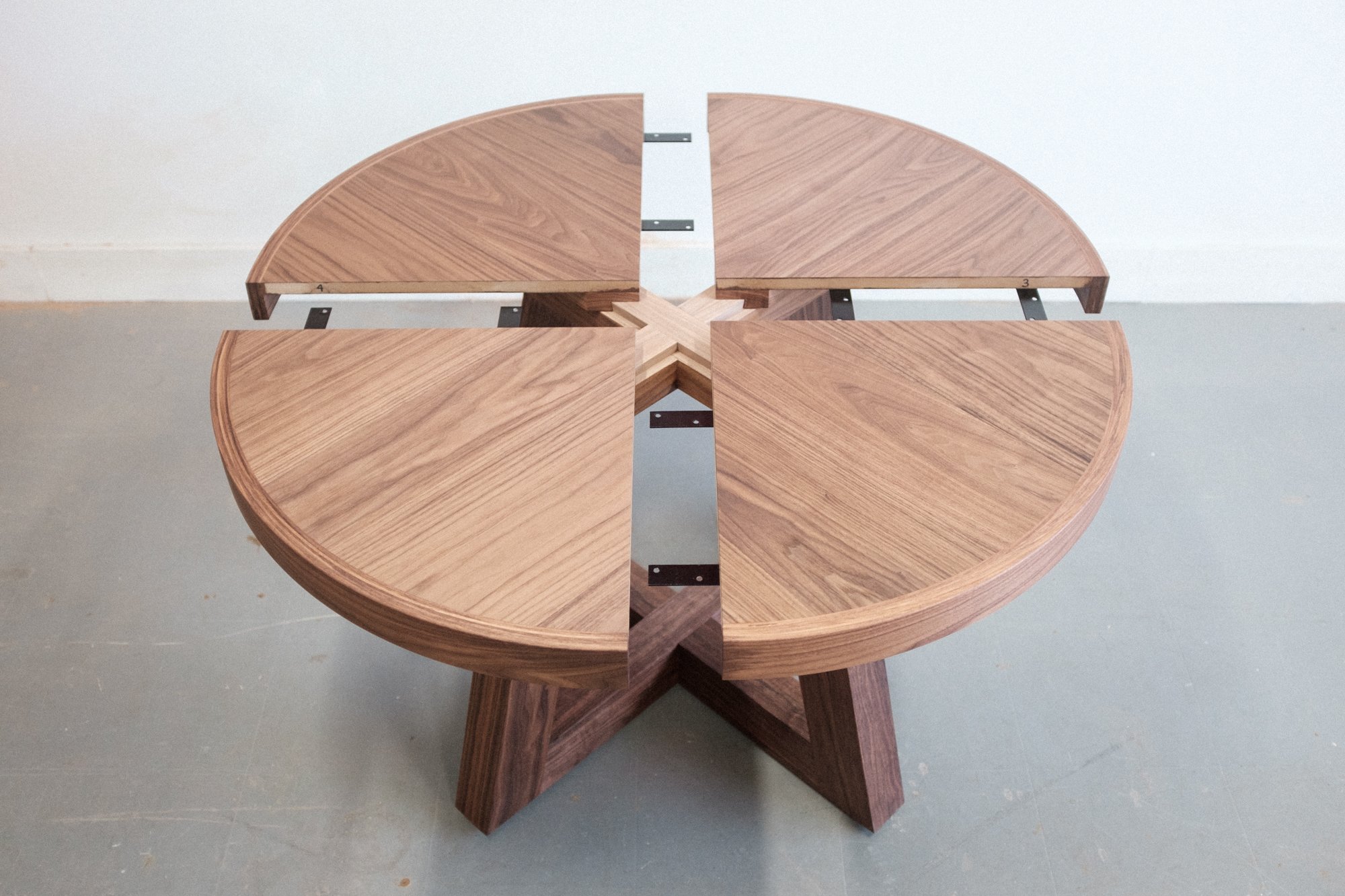
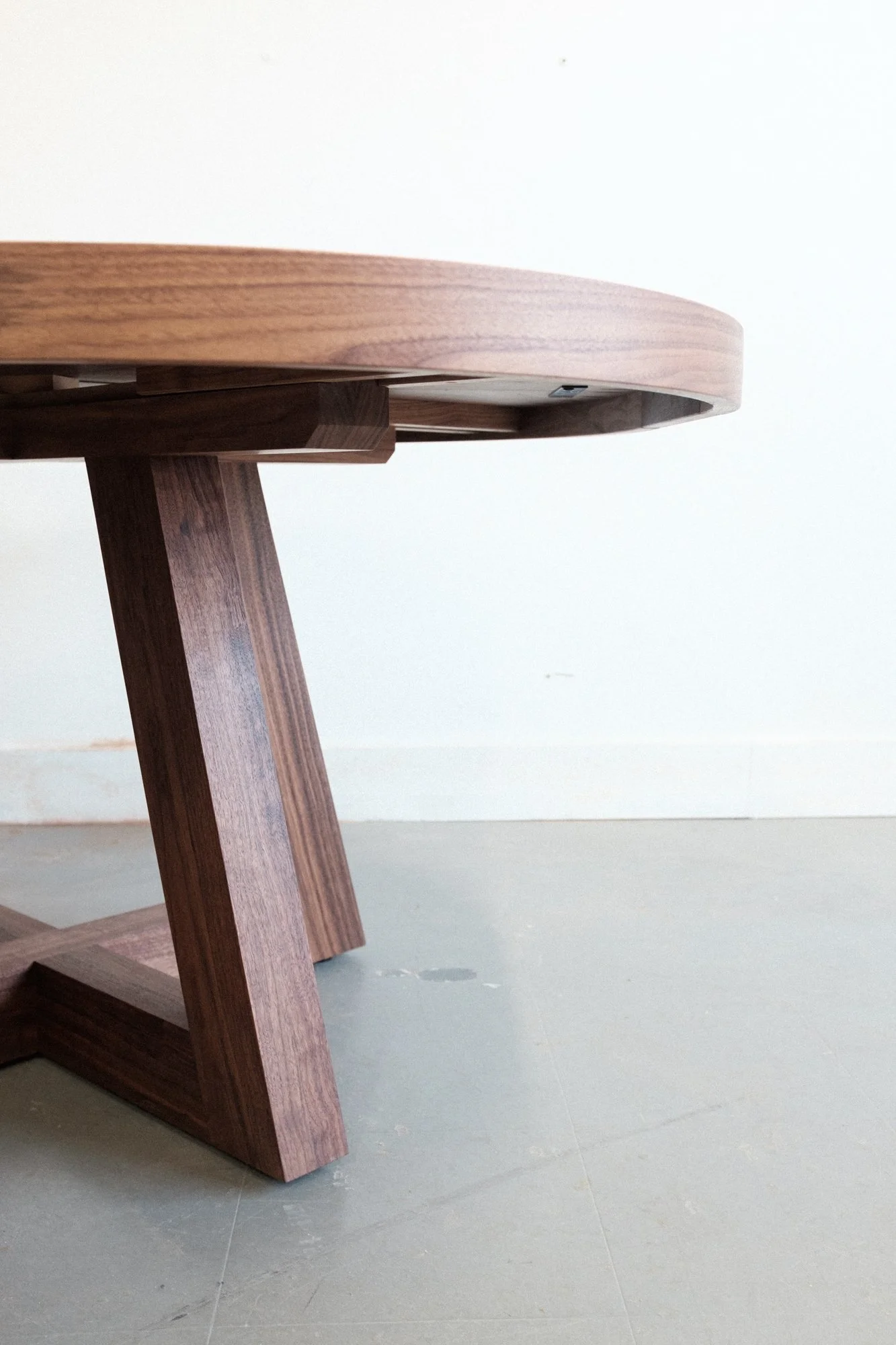
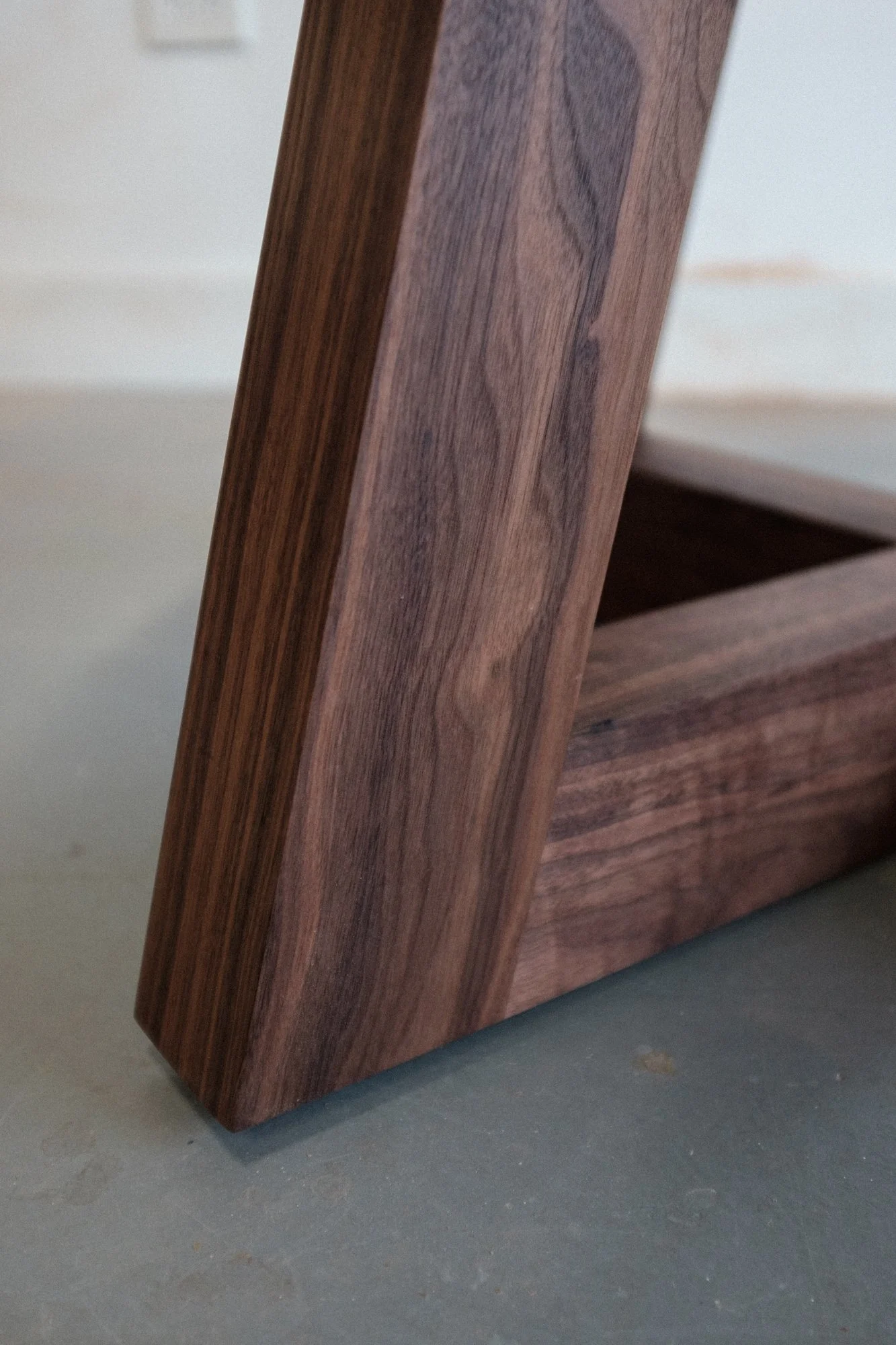
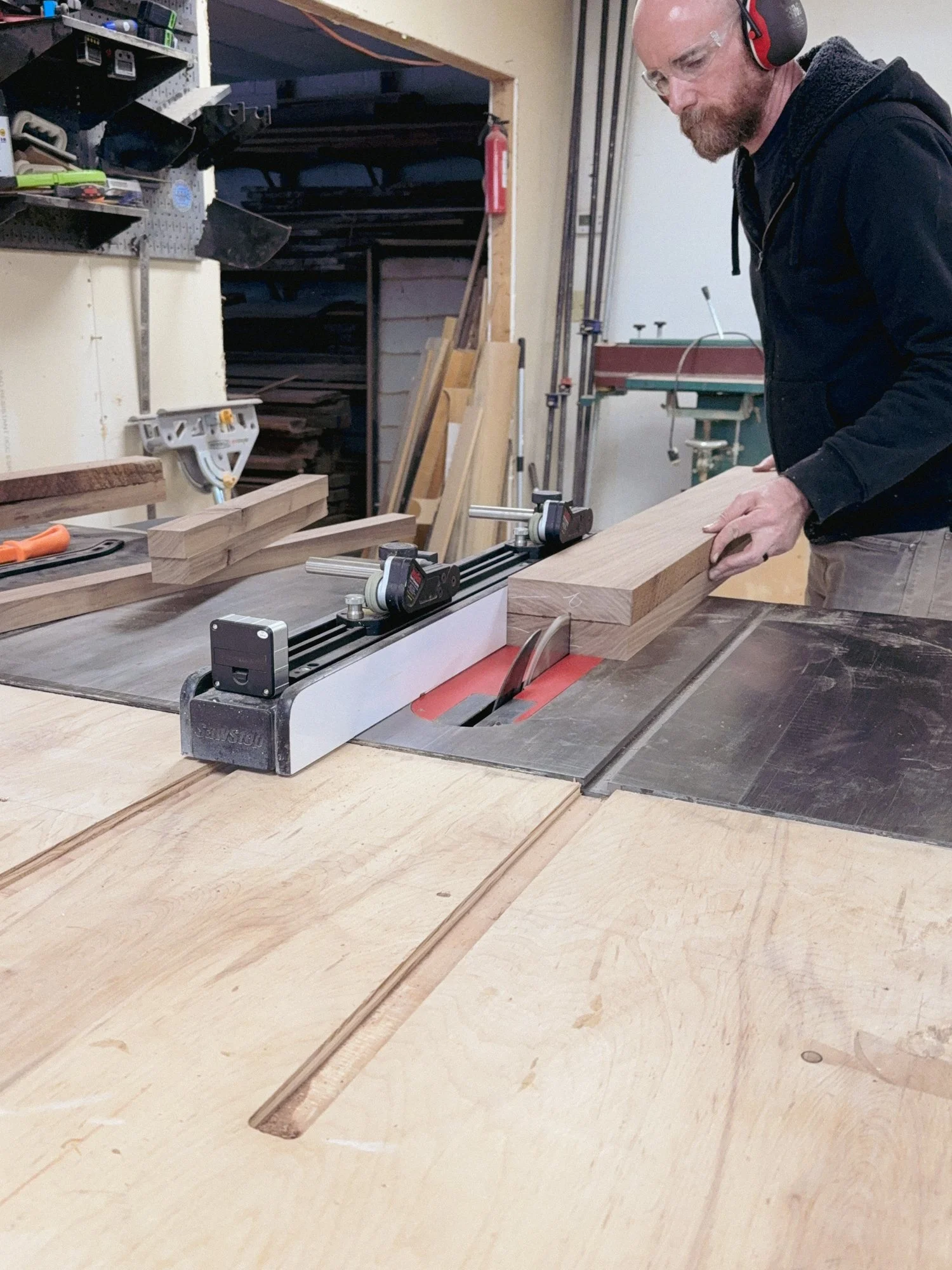
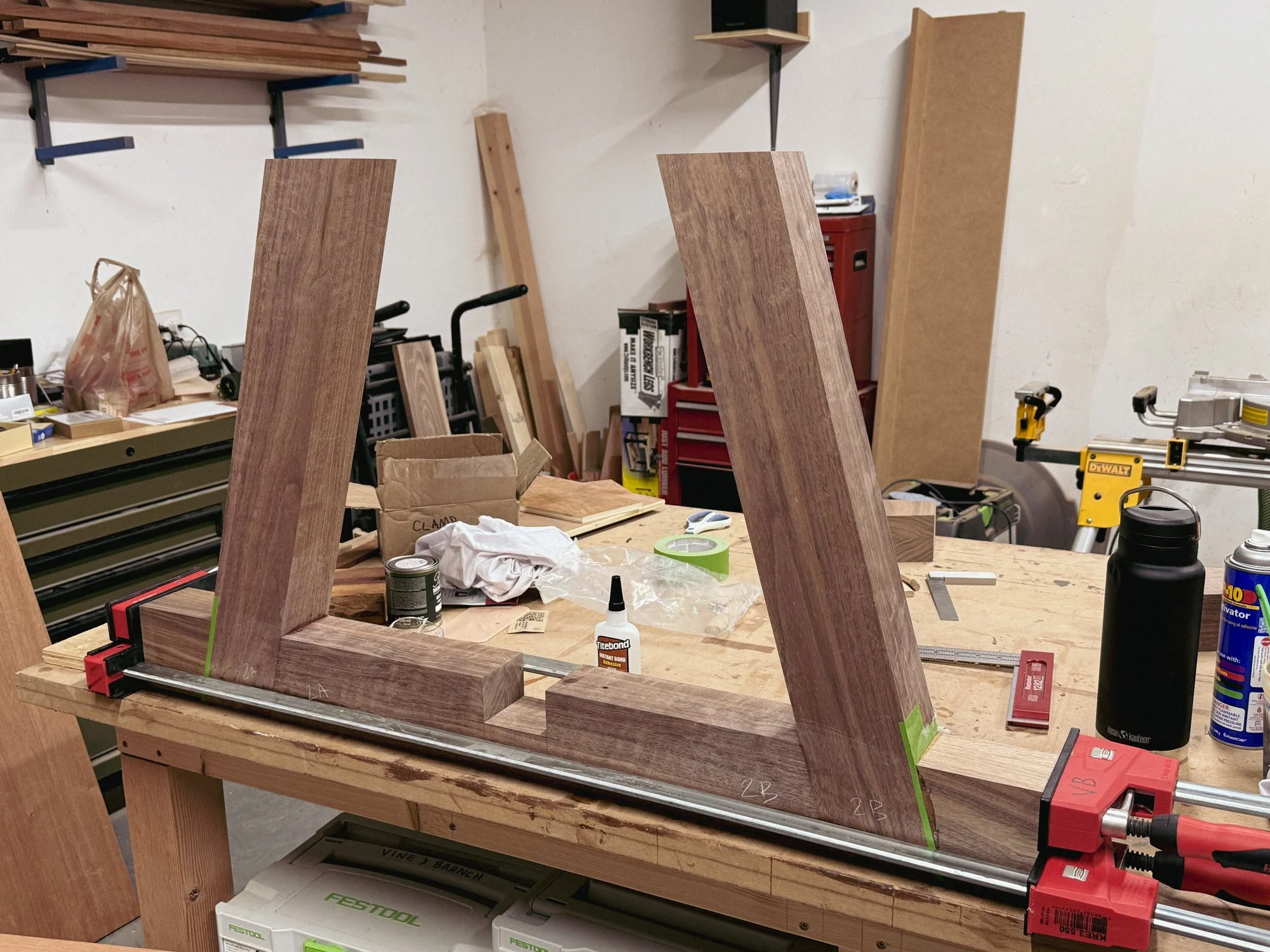
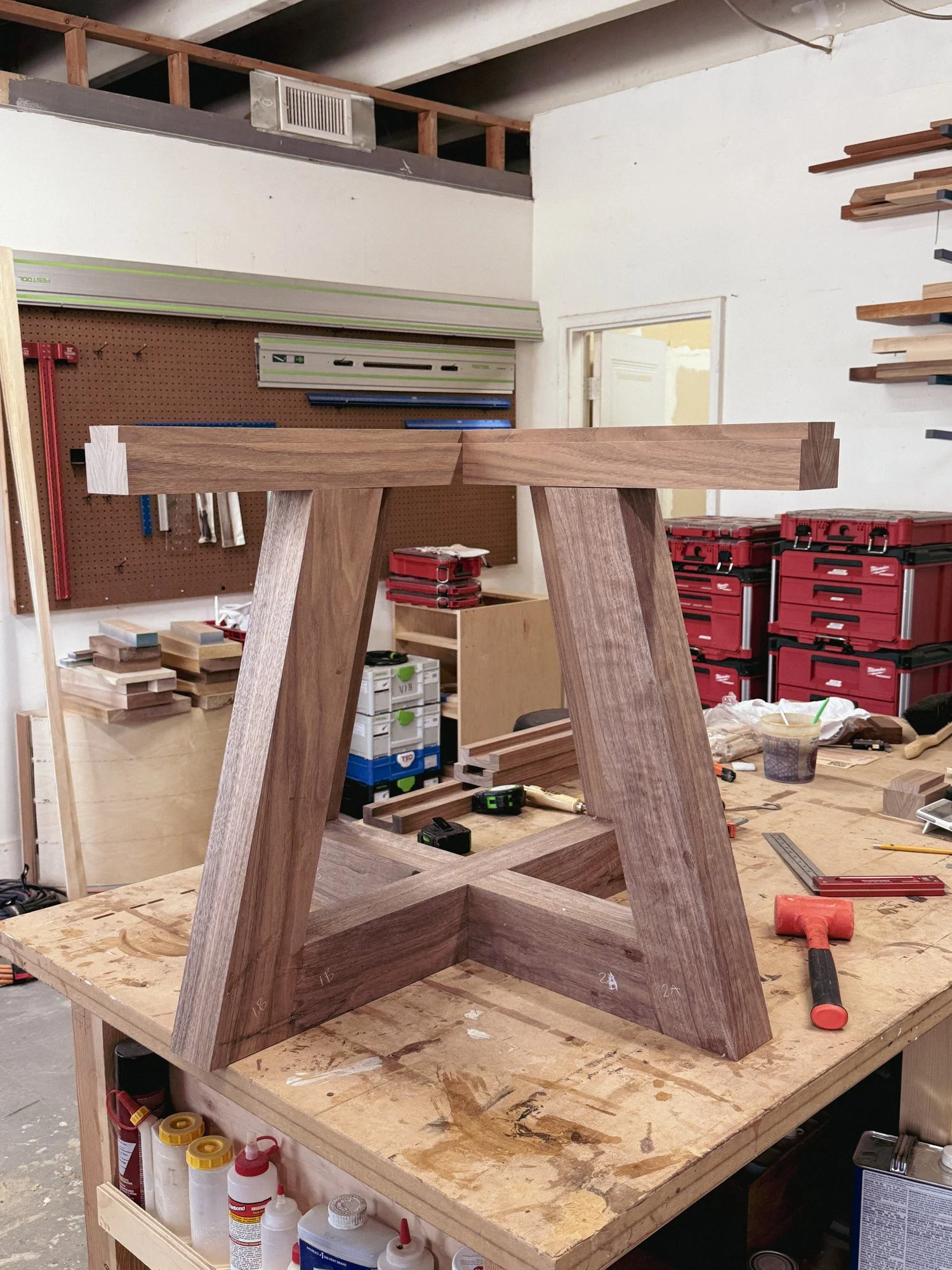
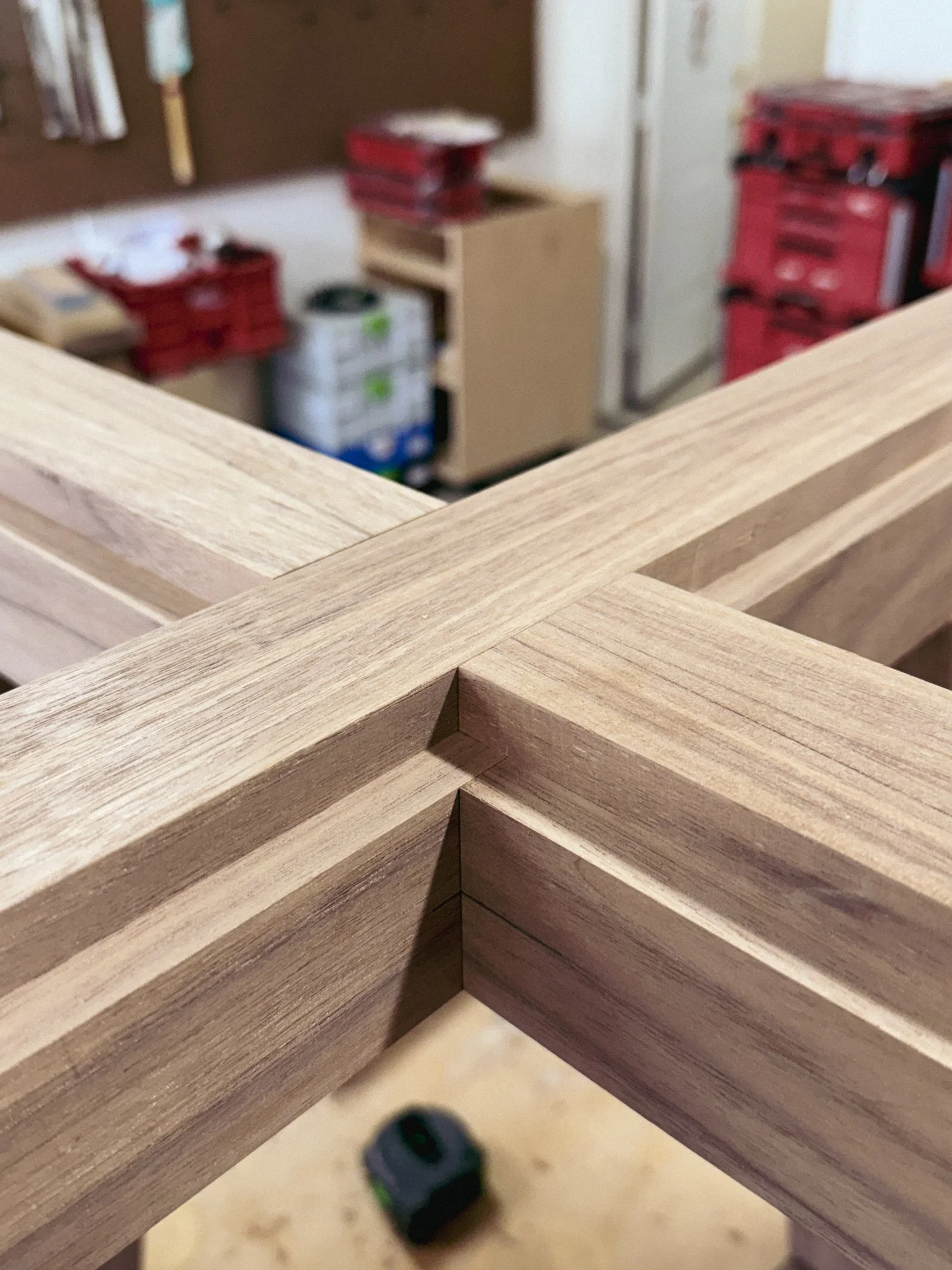
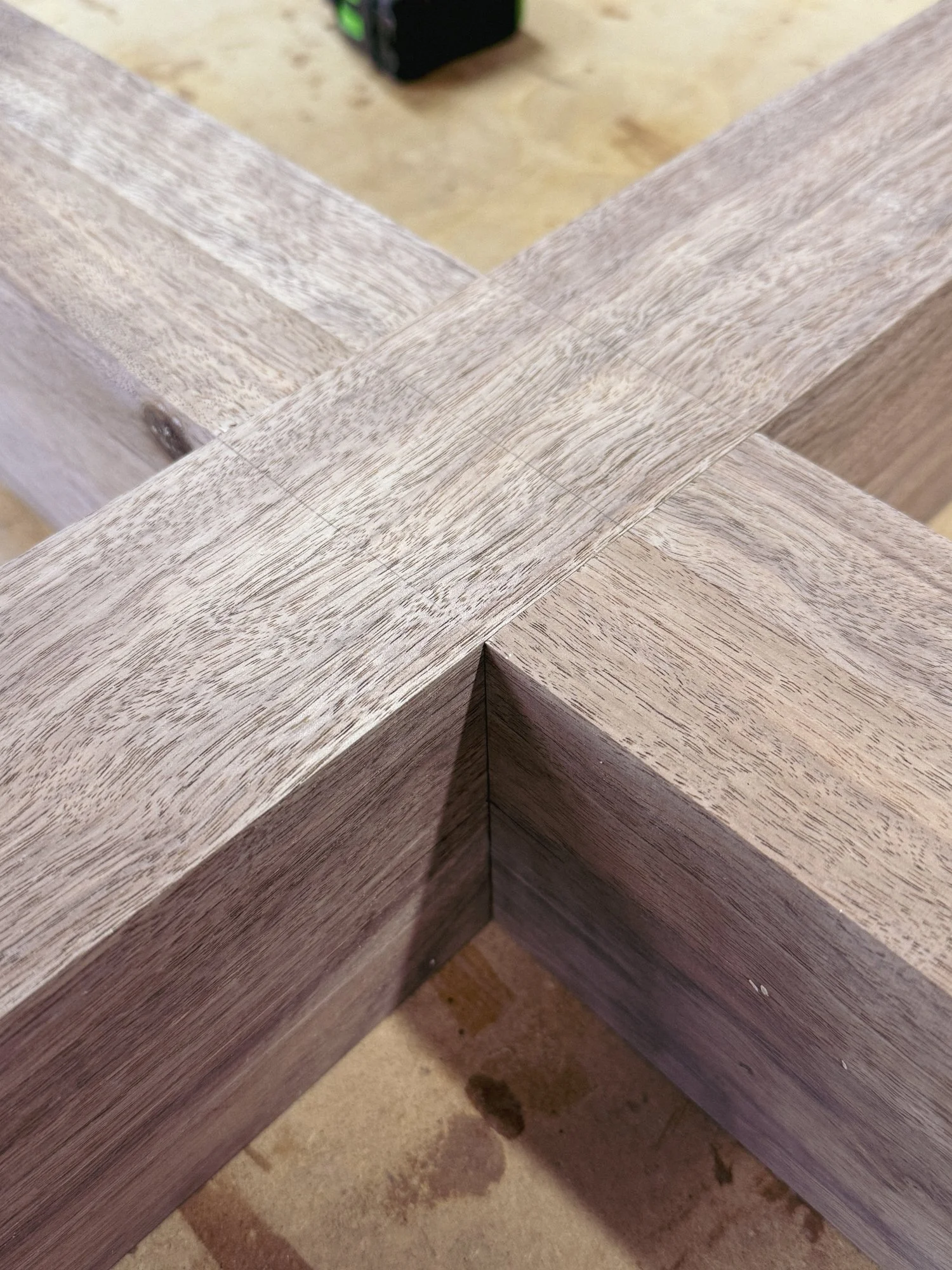
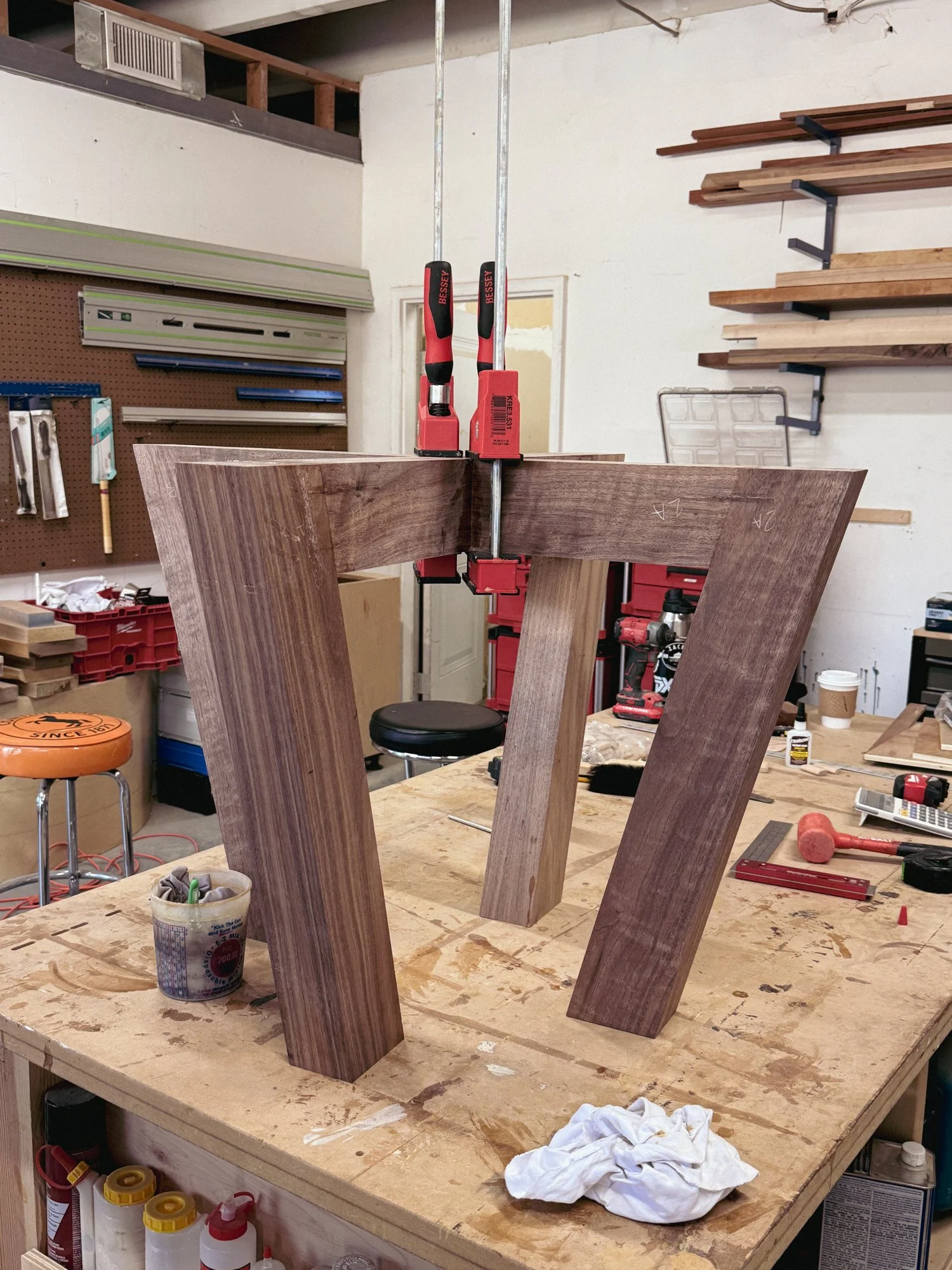
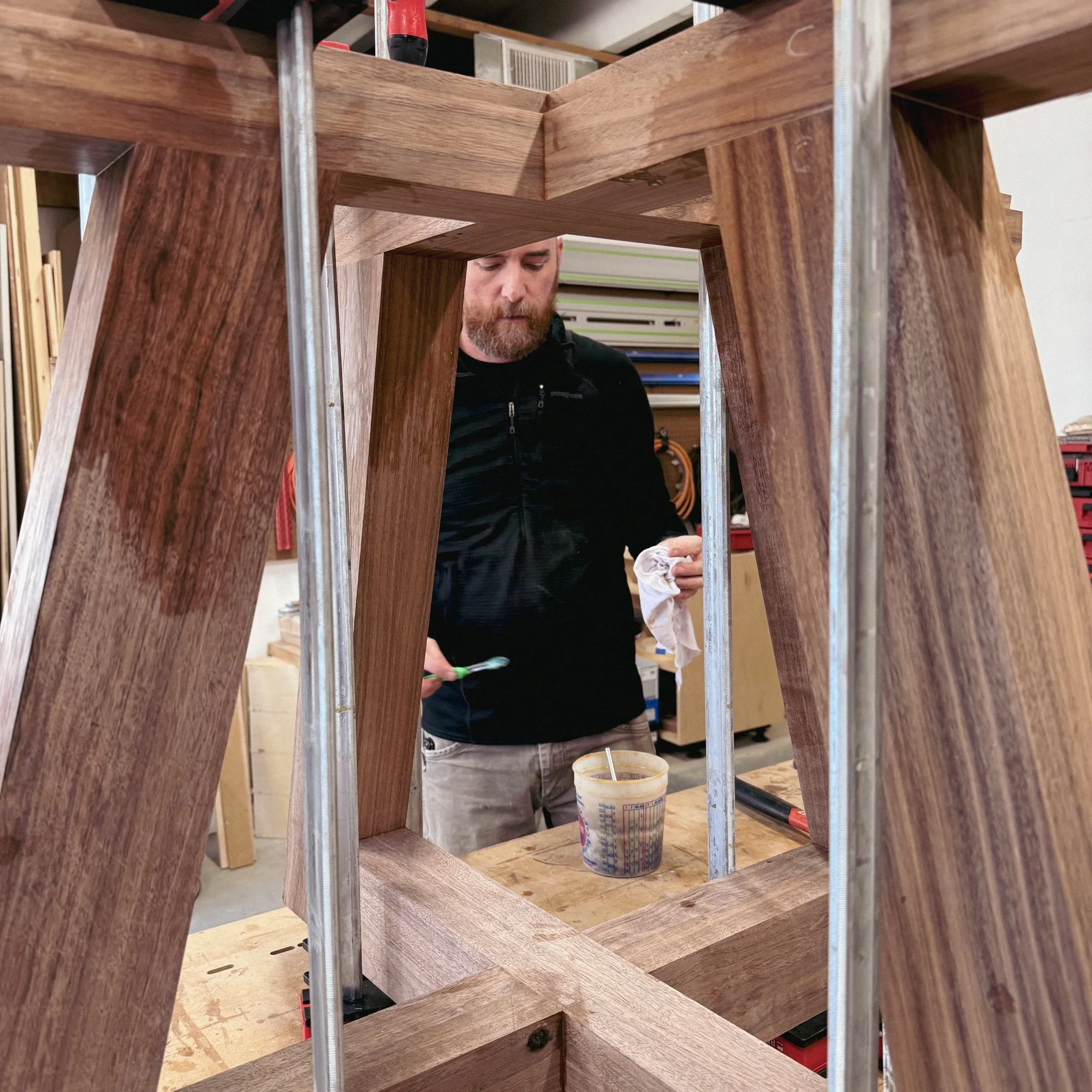
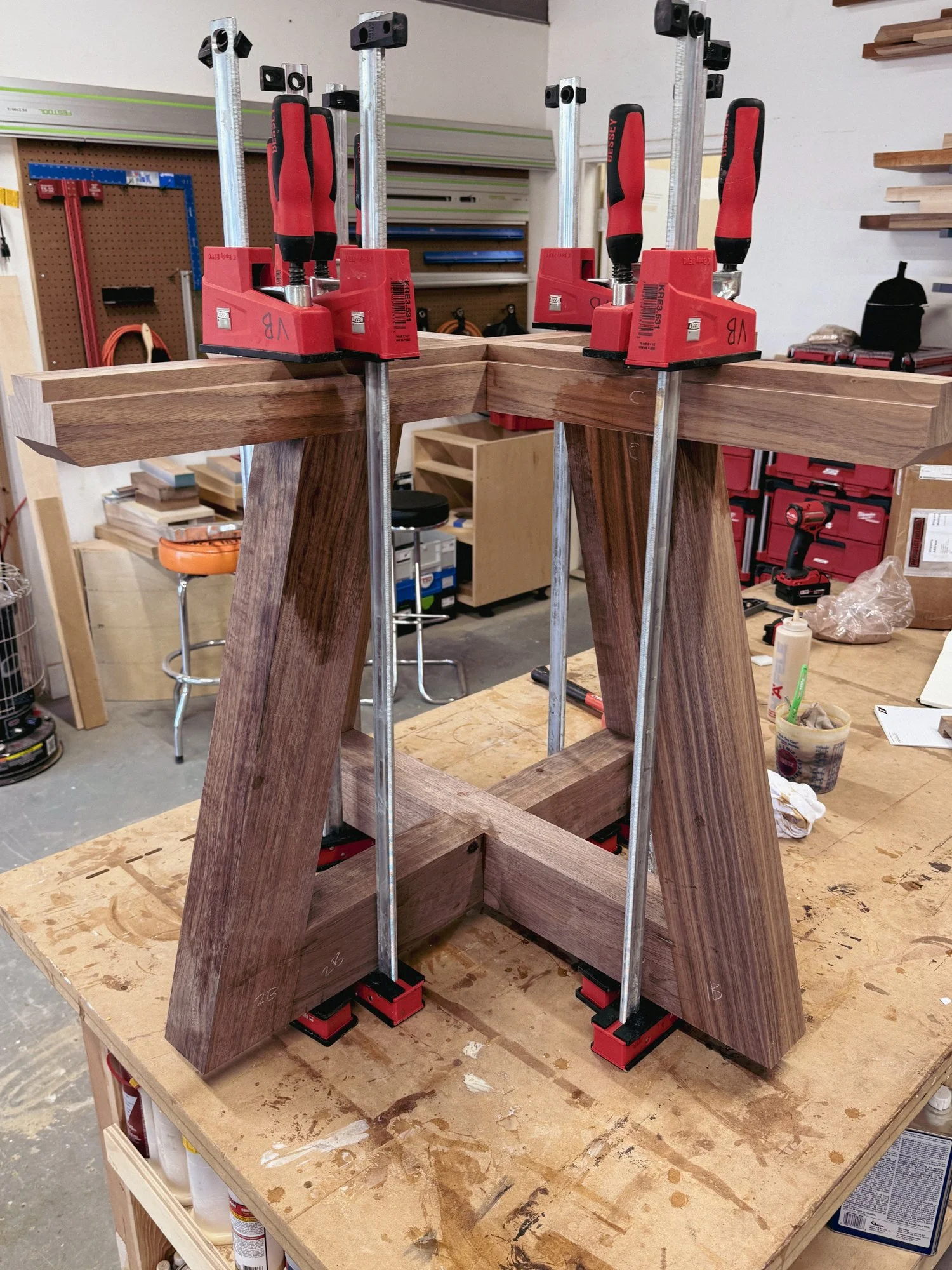
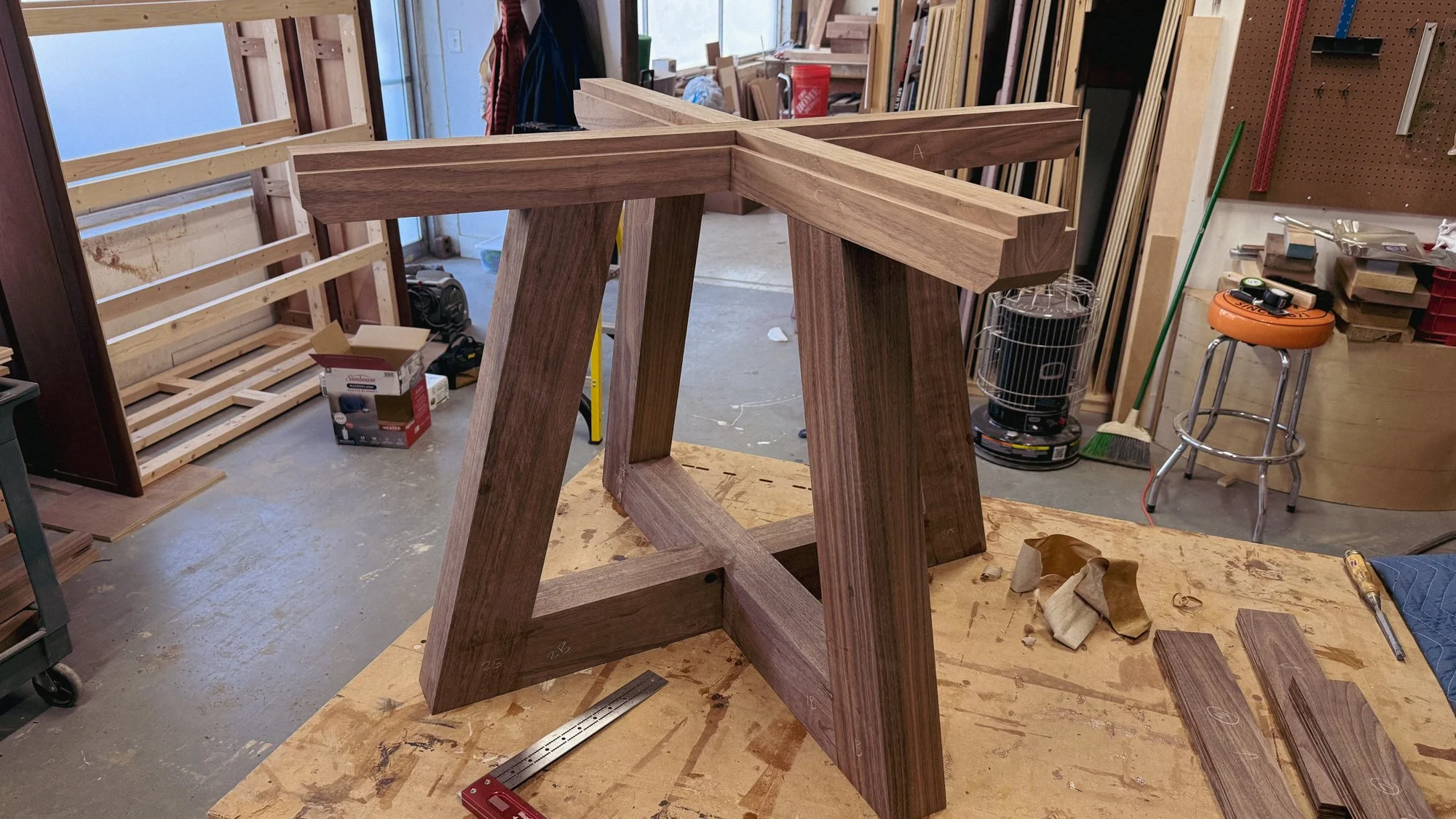
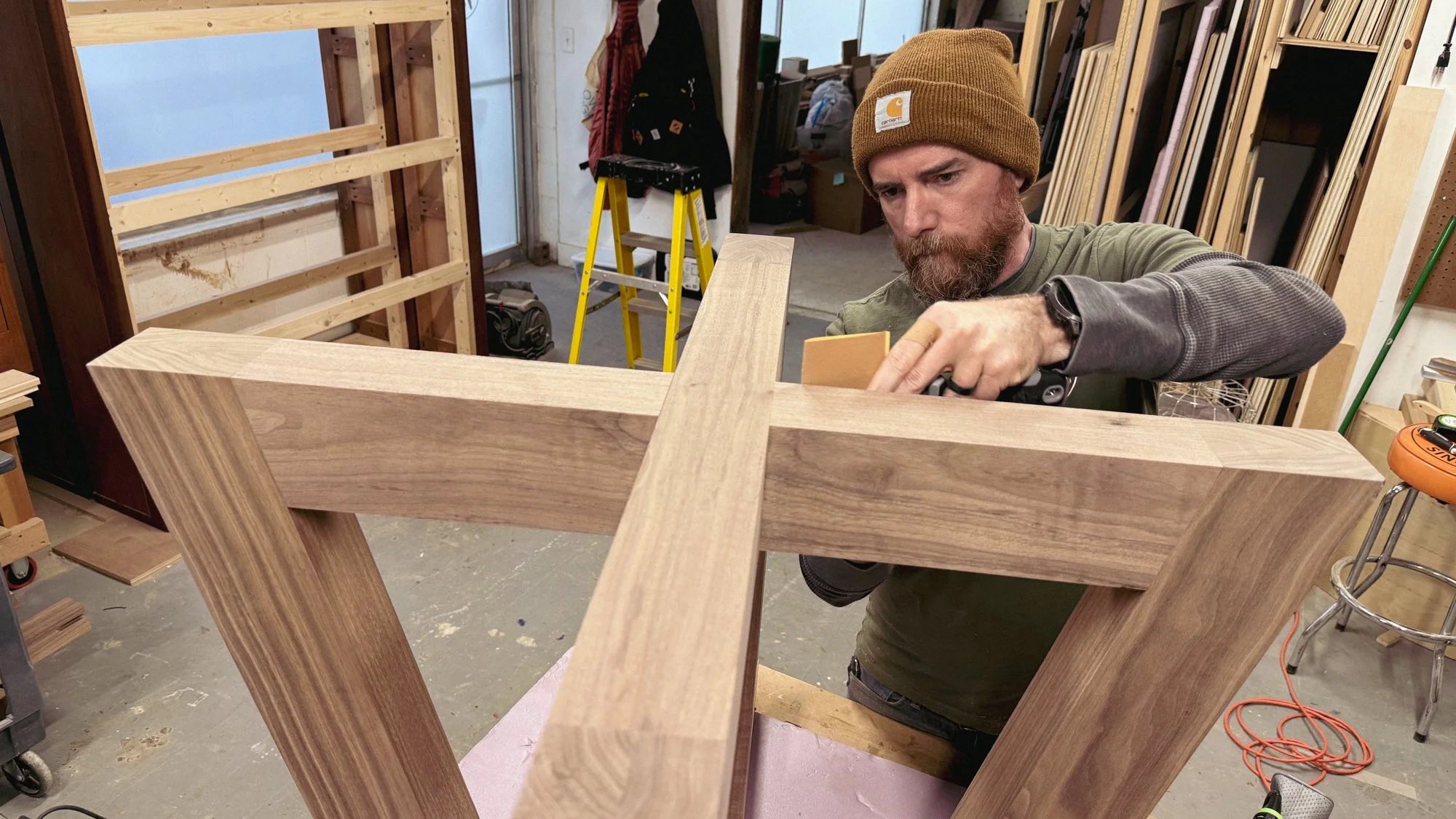
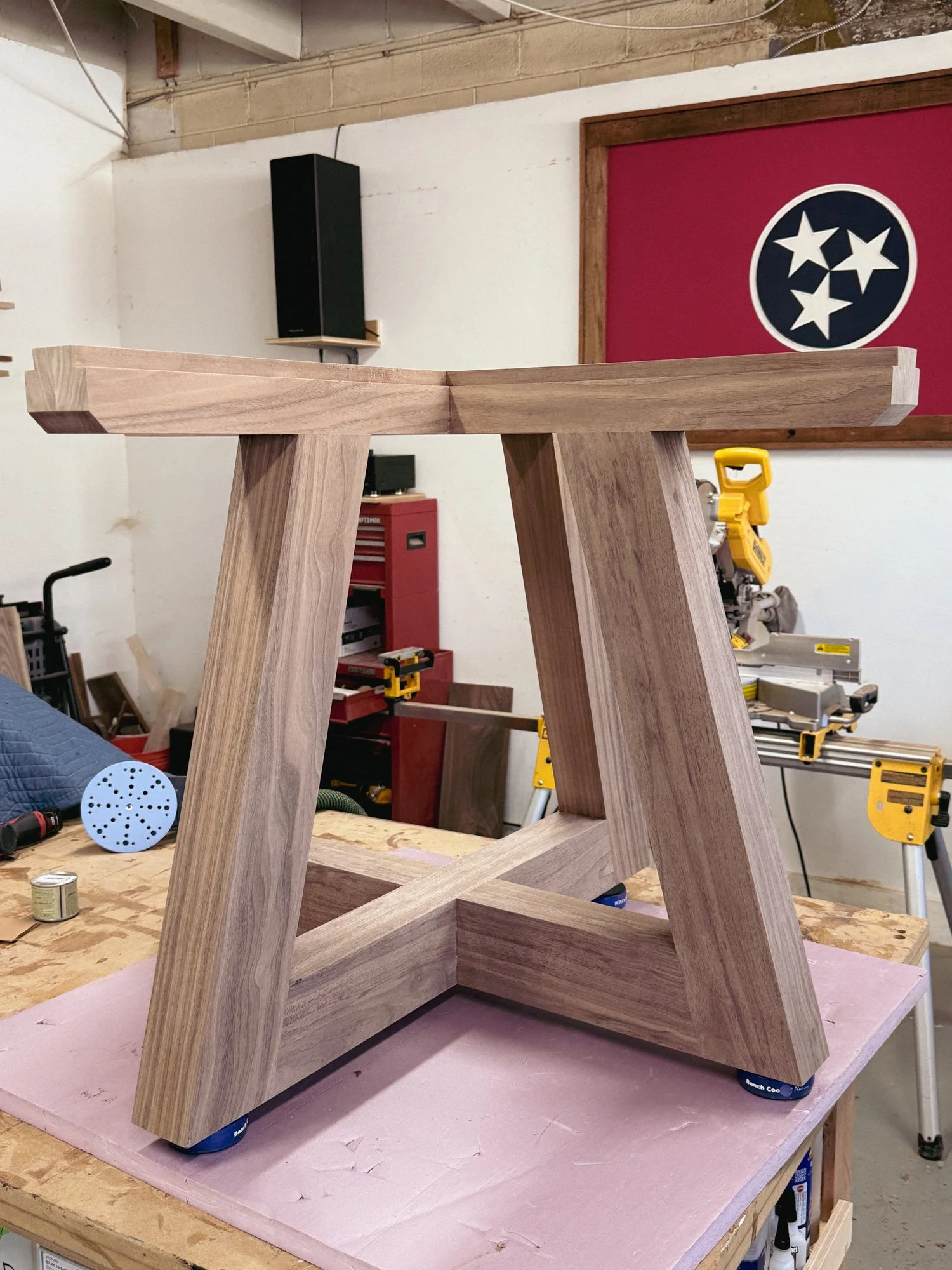
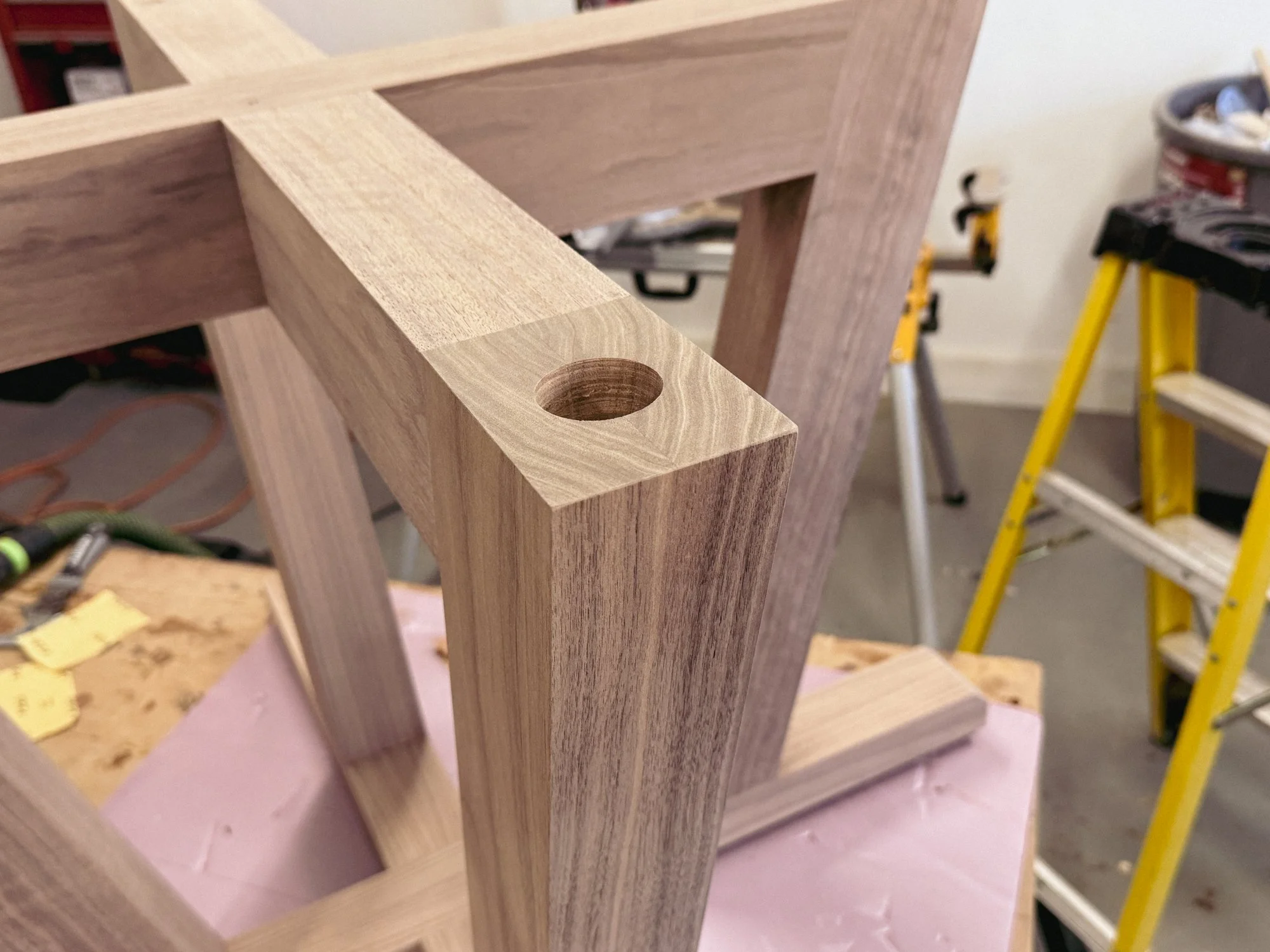
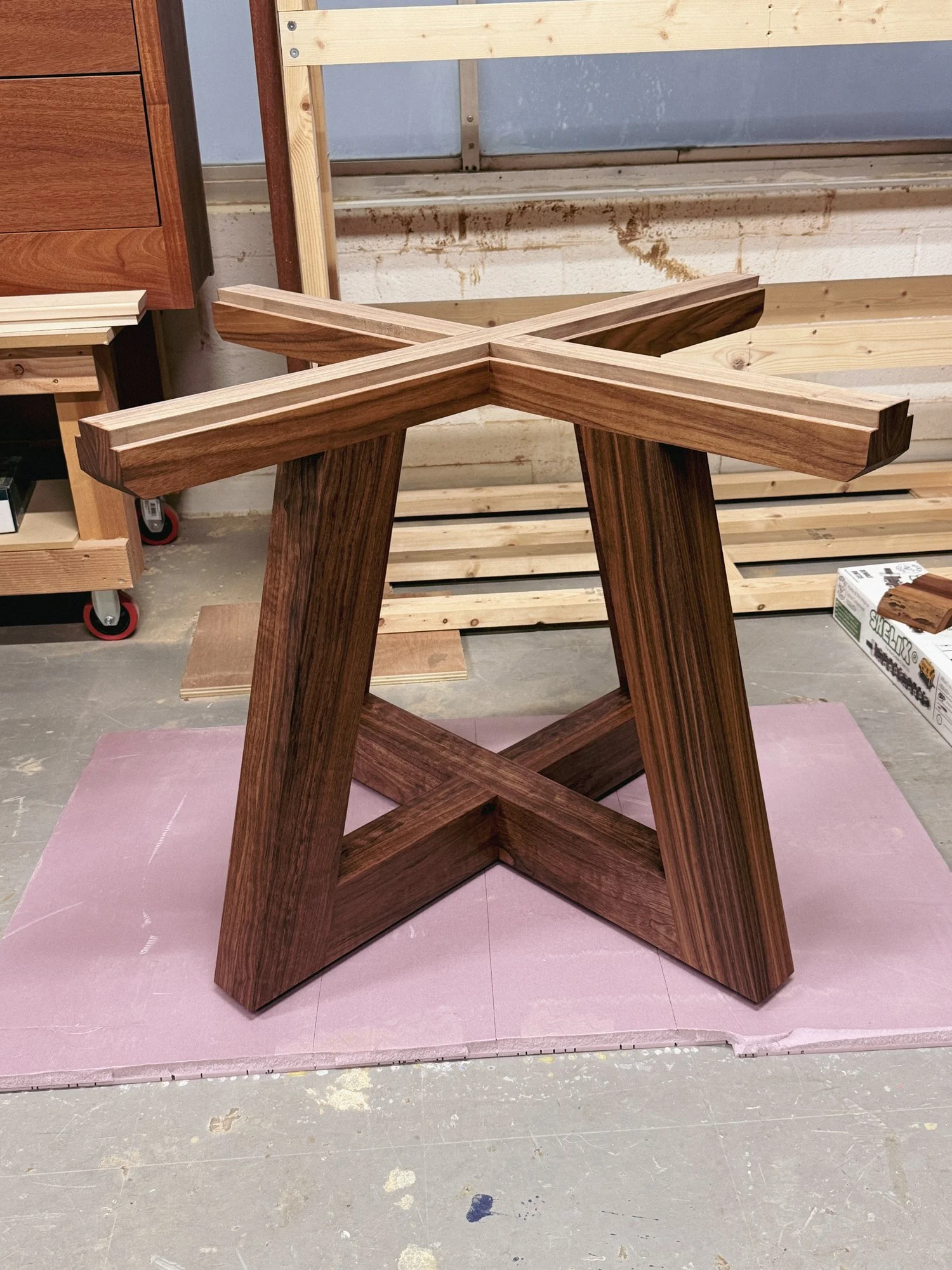
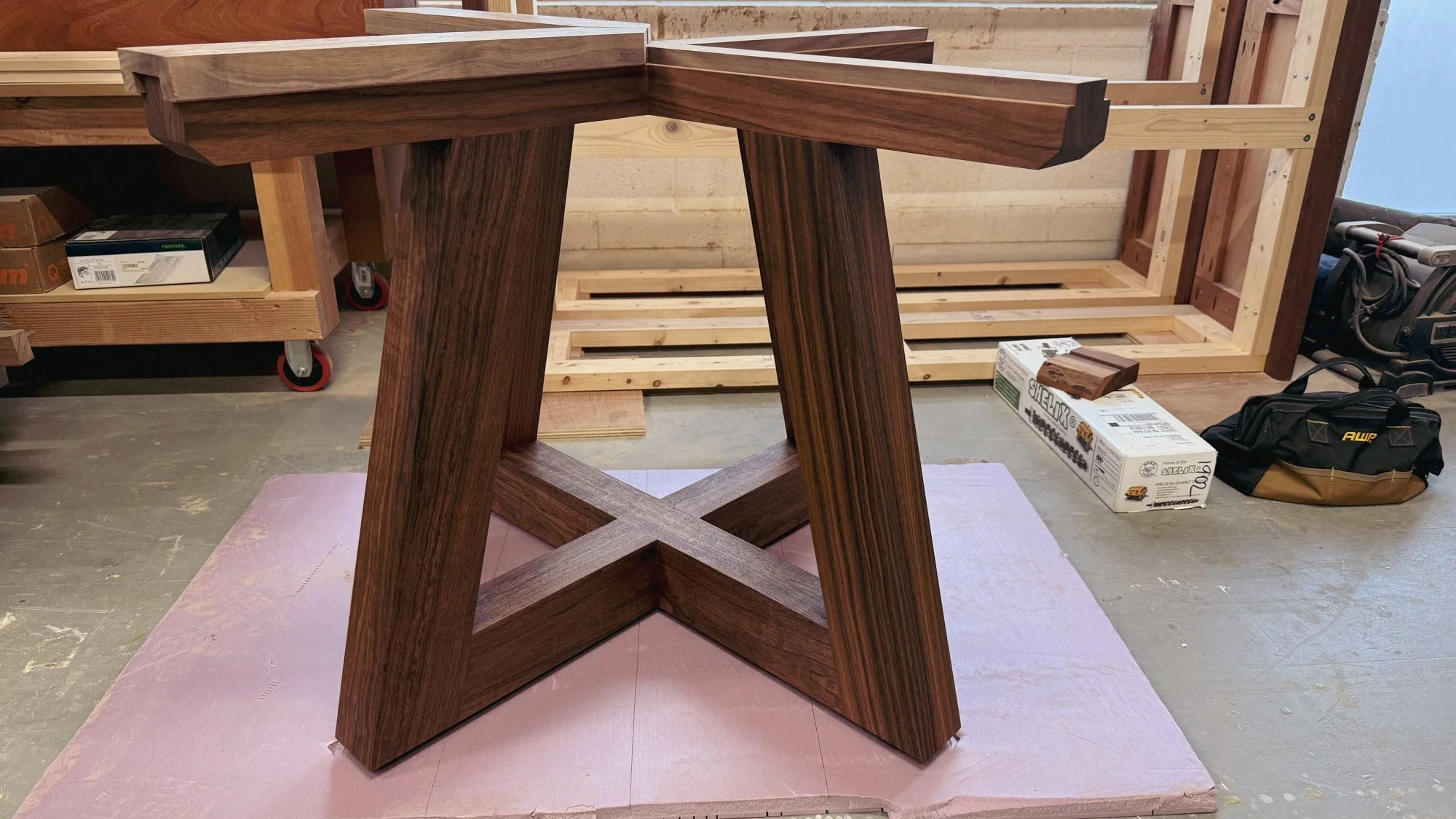
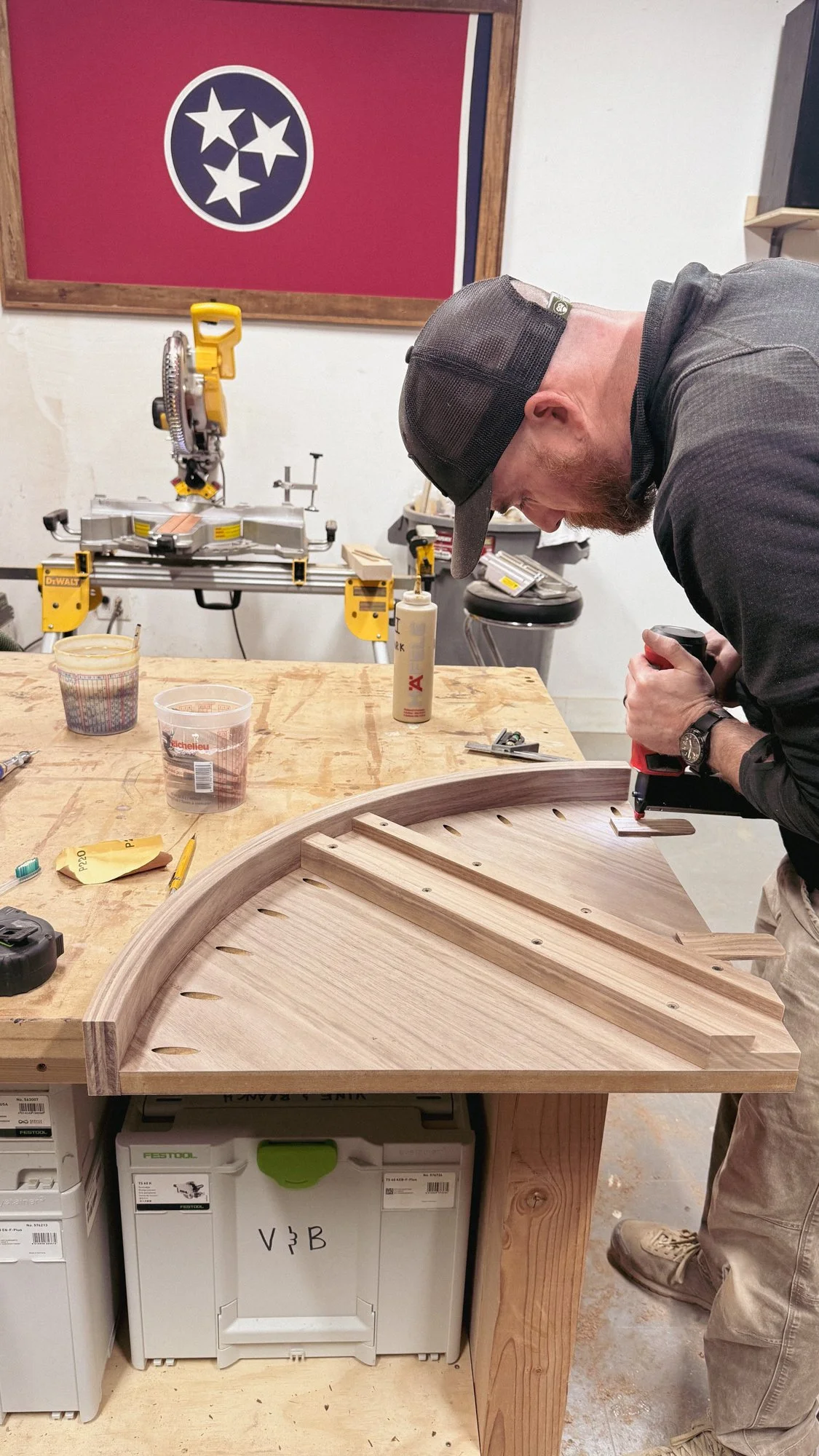
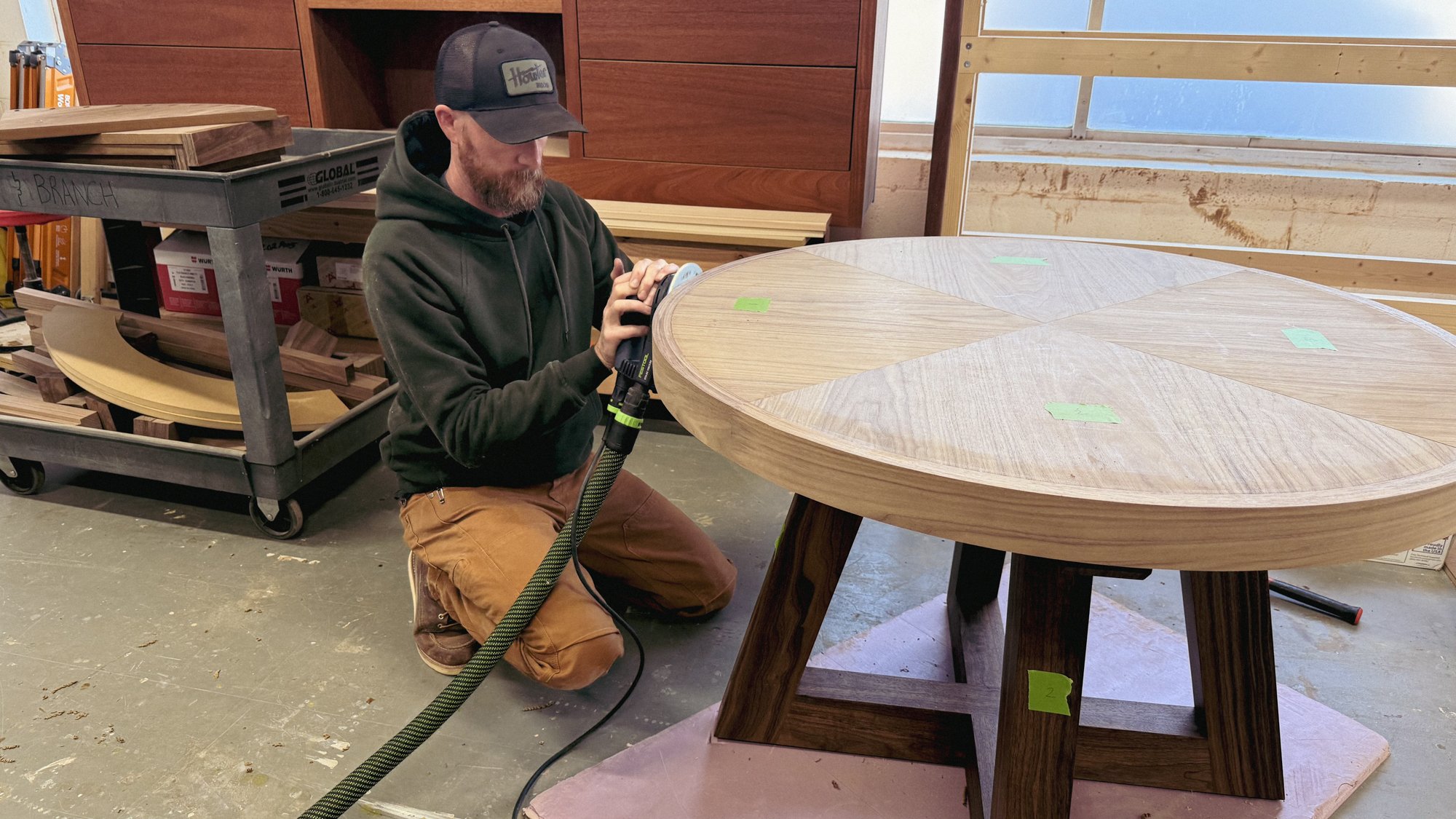
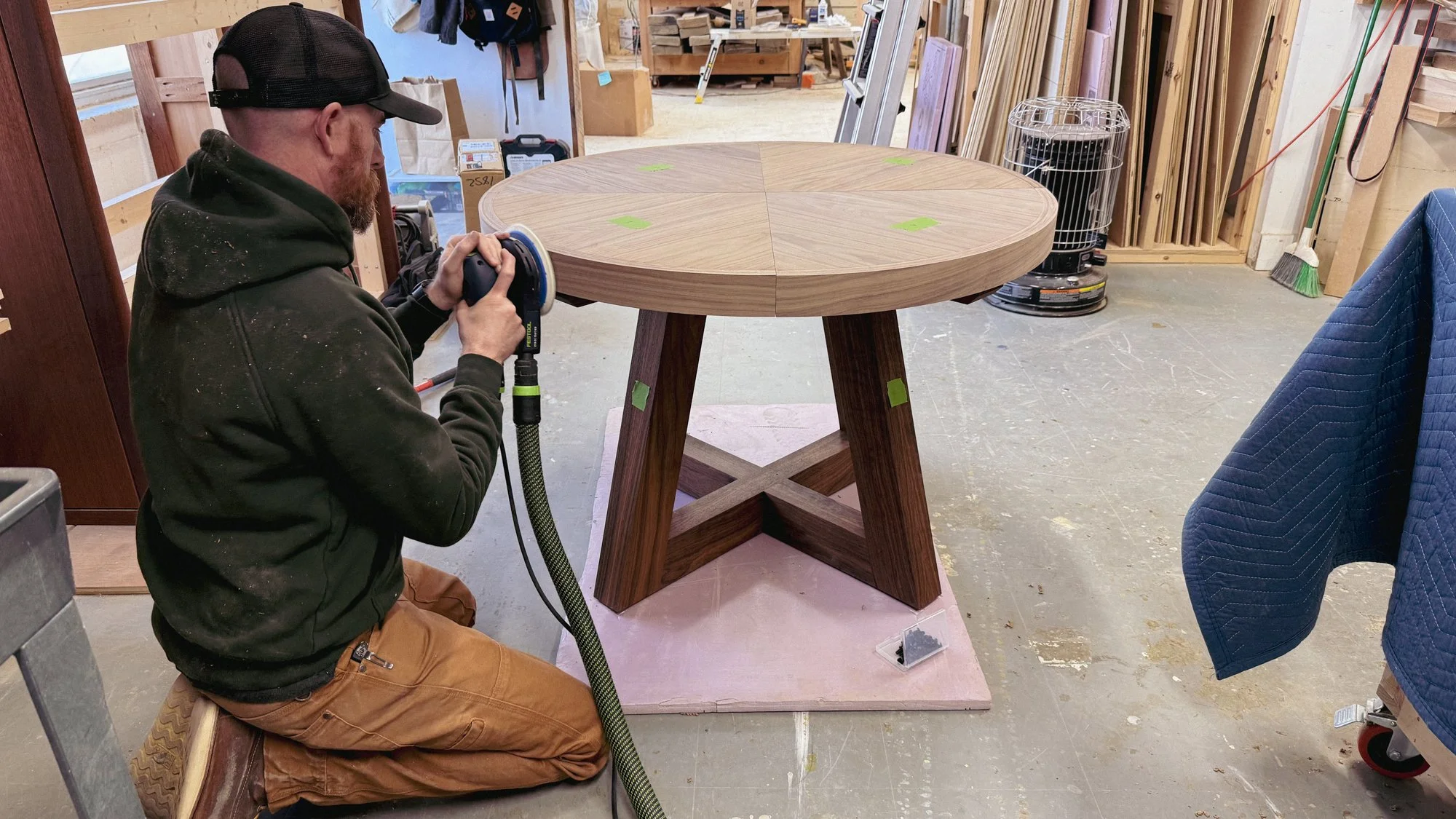
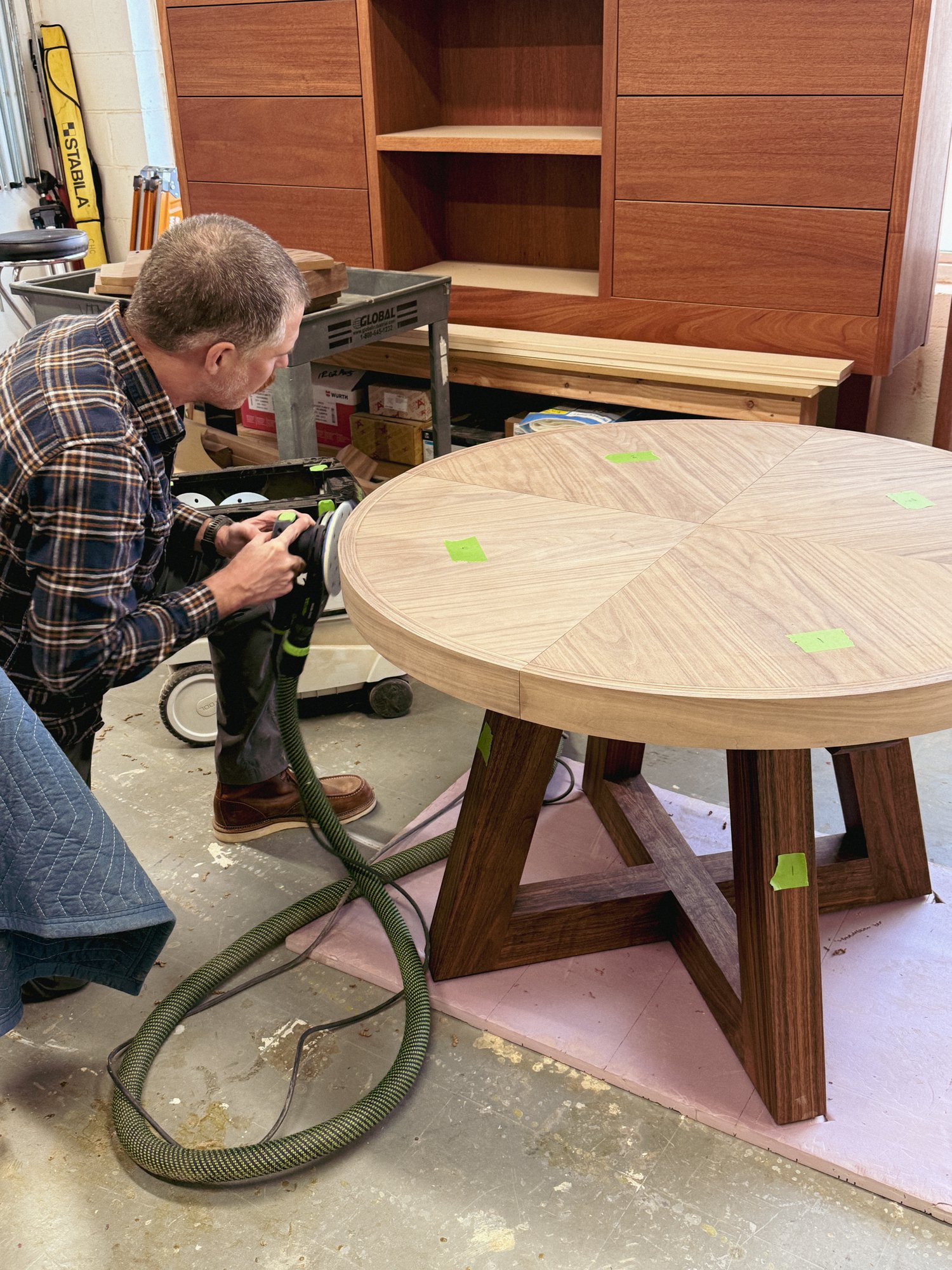
Back in the shop, I moved the idea into SketchUp and started refining it. The base was a simple trapezoid with long runners at the top to act as tracks for the expanding sections. The plan was for the outer pieces to ride on sliding dovetails and lock together in both the closed and expanded positions.
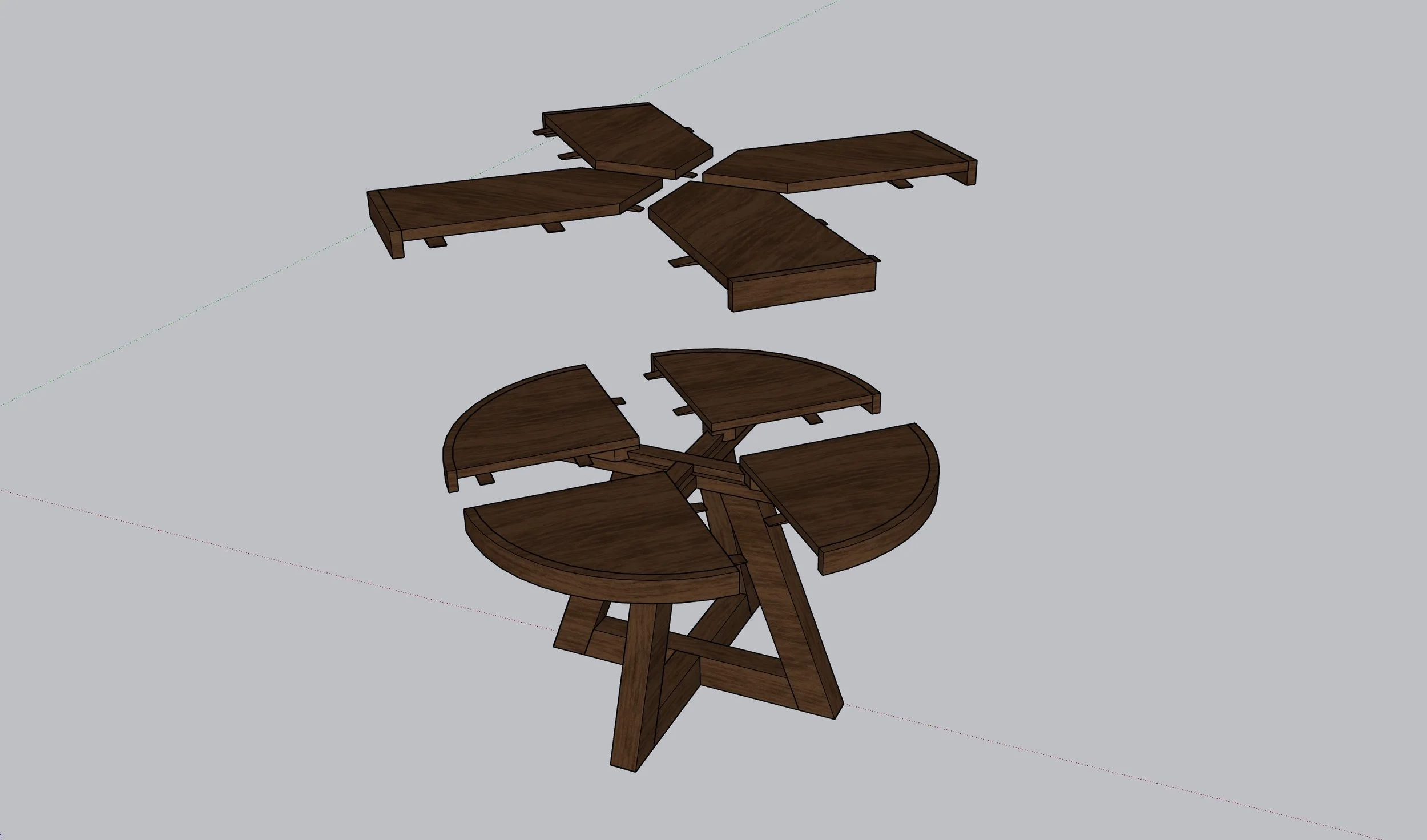
Once we got into production, though, things didn’t go quite as planned. And it wasn’t until late in the game that we found out.
The sliding dovetails needed a little play to move smoothly, and move smoothly they did. But that play introduced a problem I didn’t anticipate. The top sections wobbled on the tracks and felt unstable.
I had a plan to fix that when everything locked together, or so I thought. The system used wedges mounted underneath the table to draw the quarters tight to each other. But there was nothing controlling movement on the top side, so even when cinched down, the table still wobbled. Like one of those carnival floor games that shifts under your feet.
This is the point where I started to panic.
We were in the final stretch, with a delivery date just days away, and I wasn’t sure we could solve it. My shop foreman and I went back and forth on solutions, but everything felt like a compromise.
That night, after leaving the shop way too late, I crashed hard. Apparently that’s when my brain does its best work.
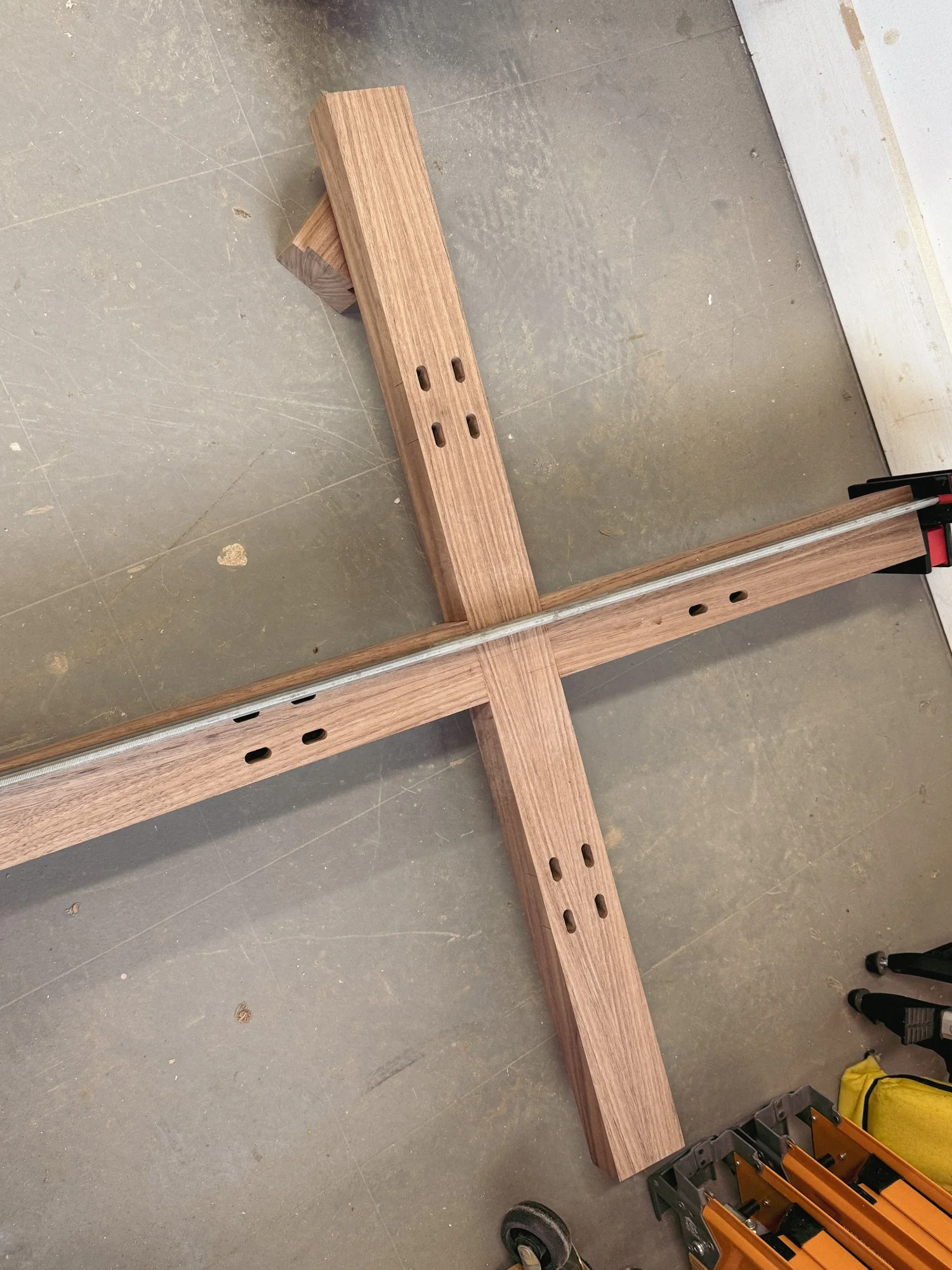
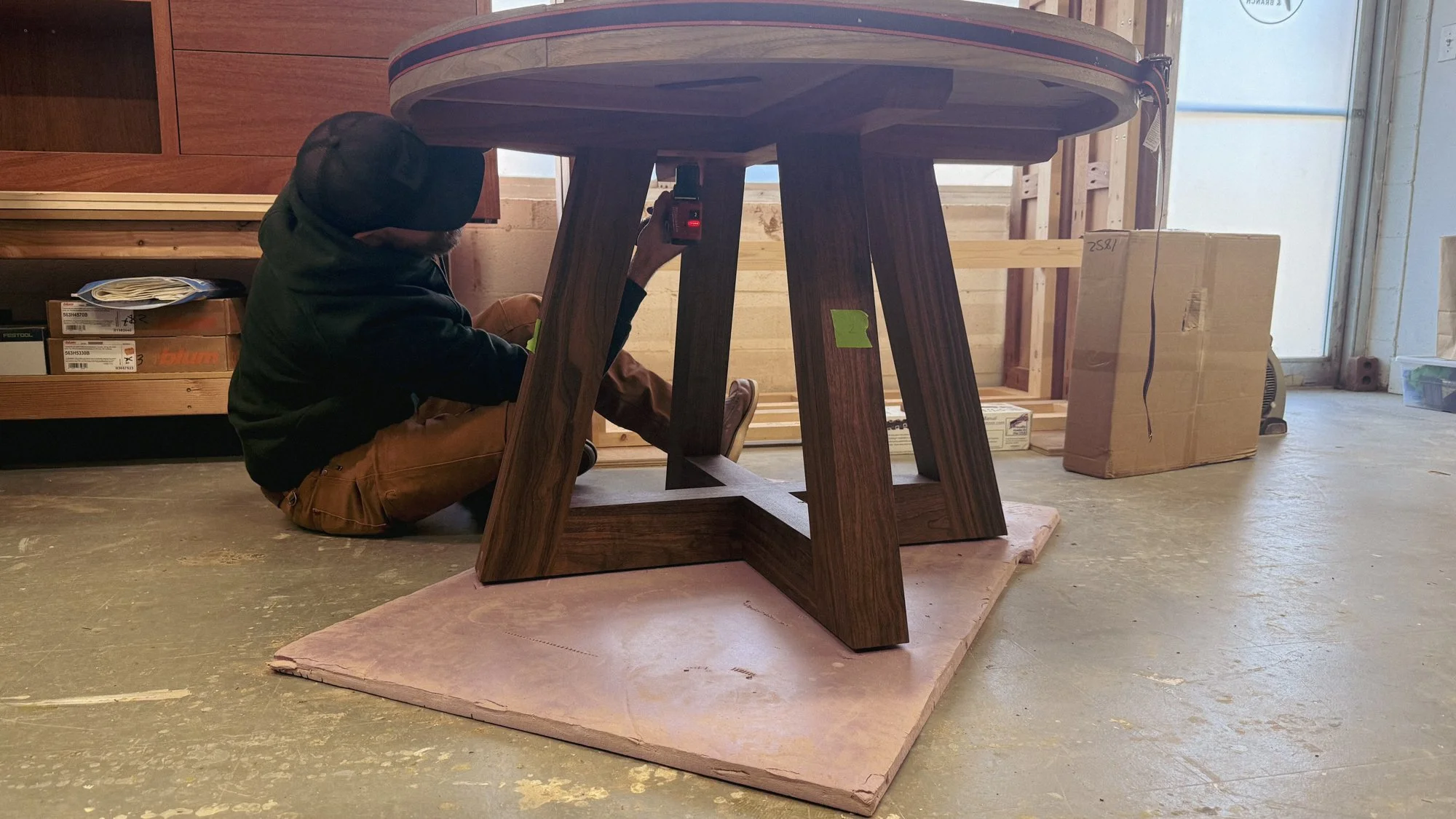
The solution ended up being simple. We scrapped the wedges and used mending plates instead. One half stayed fixed to the underside of each section, and when the table came together, you bolted the halves together with an Allen wrench.
Was it ideal? Nope.
Did it work? Beautifully.
The table locked in solid. No movement.
The tradeoff was that it takes 32 screws to move between configurations.
And that’s the reality of one-off, custom furniture that doesn’t follow established methods. You run into problems you can’t fully predict, and you solve them as you go.
There’s a saying that goes something like, “the sign of a true craftsman is not that you don’t make mistakes, but that no one can find them when you do.”
I knew the table would be beautiful. From the moment I sketched it, the question was always whether it would work.
We delivered it just in time for Robert’s Christmas gathering, and he loves it.
On to the next one.